Paul Keres's Classical Positional Harmony
Paul Keres (White) vs. Max Euwe (Black) · Keres–Euwe Match, Netherlands (1940) · Queen's Indian Defense
Estonian legend Paul Keres outplays former World Champion Max Euwe with crystalline Queen's Indian precision, trading pieces cleanly into an instructive superior endgame.
Interactive Demonstration
Paul Keres vs. Max Euwe (1940)
Keres–Euwe Match, Netherlands · ECO E19 Queen's Indian Defense · Result 1-0
Decisive Turning Points
Annotated Key Moments
- 8. Ne5: 8. Ne5 - Anchors White's knight cleanly on the central outpost.
- 15. Bxe4: 15. Bxe4 - Wins a clean central pawn with zero structural weakness, showcasing Keres's surgical clarity.
Opening Theory Studied Here
E12 · Queen's Indian Defense Complete Guide →Verified Companion Book
Fundamental Chess Openings - GM Paul van der Sterren
Gambit Publications · ISBN 1906454132
Purchase Book on AmazonFIDE-Verified Algebraic Scoresheet
Complete Game PGN
[Event "Keres–Euwe Match, Netherlands"]
[Date "1940.??.??"]
[White "Paul Keres"]
[Black "Max Euwe"]
[Result "1-0"]
[ECO "E19"]
[Opening "Queen's Indian Defense"]

1. d4 Nf6 2. c4 e6 3. Nf3 b6 4. g3 Bb7 5. Bg2 Be7 6. O-O O-O 7. b3 d5 8. Ne5 c6 9. Bb2 Nbd7 10. Nd2 c5 11. e3 Nxe5 12. dxe5 Ne4 13. Nxe4 dxe4 14. Qg4 Qc7 15. Bxe4 Bxe4 16. Qxe4 Rfd8 17. Rfd1 Rxd1+ 18. Rxd1 Rd8 19. Rxd8+ Qxd8 20. Kg2 1-0
Featured Masters in This Encounter

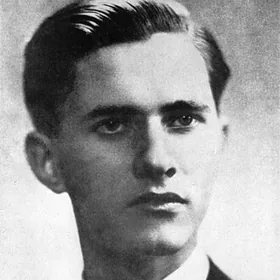
Paul Keres
Winner of AVRO 1938 · 4× Candidates Runner-Up ("The Crown Prince of Chess")
More Classic Games to Study Next
The Hastings Immortal
Wilhelm Steinitz vs. Curt von Bardeleben
At England's historic 1895 Hastings Congress, the 59-year-old first World Champion unleashed a breathtaking rook sacrifice on g7 where every White piece hung en prise.
Birth of the Marshall Attack
José Raúl Capablanca vs. Frank James Marshall
US Champion Frank Marshall secretly prepared his daring 8...d5 gambit for years to spring on Capablanca, yet the Cuban genius refuted the storm over the board with icy precision.
Alekhine's Positional Combination
Richard Réti vs. Alexander Alekhine
Alekhine himself called this one of his two finest games, a long tactical combination spanning fifteen moves that ends by trapping White's knight in the middle of the board.