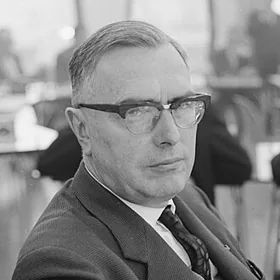
Max Euwe
5th World Chess Champion (1935–1937) · FIDE President (1970–1978)
A Doctor of Mathematics and gifted educator, Max Euwe defeated Alexander Alekhine in 1935 (highlighted by his iconic Pearl of Zandvoort victory) to become the 5th World Chess Champion. Later, as FIDE President (1970–1978), he stewarded the 1972 Reykjavik World Championship and authored beloved manuals including Judgment and Planning in Chess.
Portrait: Harry Pot for Anefo ]] · CC BY-SA 3.0 nl
Interactive Demonstration
The Pearl of Zandvoort (1935)
Max Euwe vs. Alexander Alekhine · World Chess Championship, Zandvoort (Game 26) · ECO A90 (1-0)
Strategic Portrait
Playing Style & Contribution
Lucid mathematical planning, disciplined opening theory, and clear instructional writing.
Verified Career Milestones
- 1935: Defeated Alexander Alekhine (+9 -8 =13) to become the 5th Official World Chess Champion.
- 1953: Published Judgment and Planning in Chess, one of the clearest intermediate strategy books ever written.
- 1970–1978: Served as FIDE President during the golden Fischer–Spassky era.
Practical Application
Lessons You Can Apply Today
- Formulate a concrete plan based on the pawn structure rather than drifting move by move.
- When you hold connected passed central pawns (as in Zandvoort 1935), push them boldly with piece backing.
- Treat chess study methodically - clarity of method beats raw memorization.
Essential Reading
Judgment and Planning in Chess - Max Euwe (1953)
Ishi Press · ISBN 4871874710
Purchase Book on AmazonSignature Openings Studied by Max Euwe
Contemporaries & Era Peers
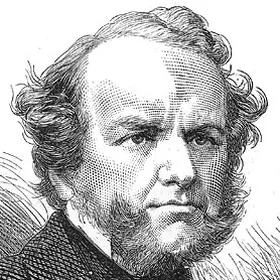
Howard Staunton
Solid positional planning, flank control with 1. c4, and foundational English opening scholarship.
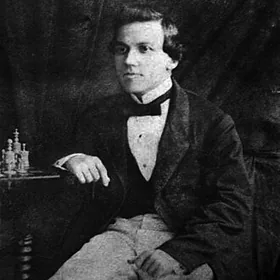
Paul Morphy
Rapid piece development, open central files, and decisive sacrifices against uncastled kings.
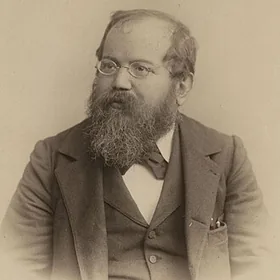
Wilhelm Steinitz
Architect of modern positional theory: small advantages, sound pawn structure, and resilient defense.