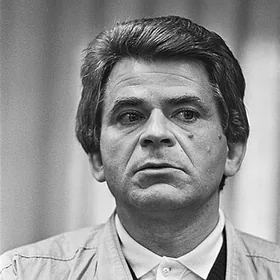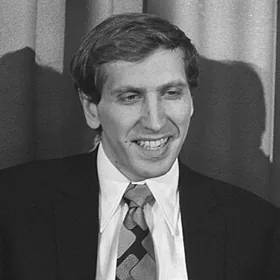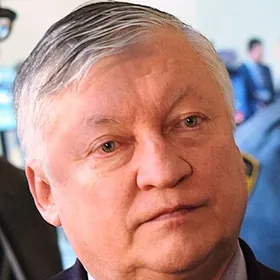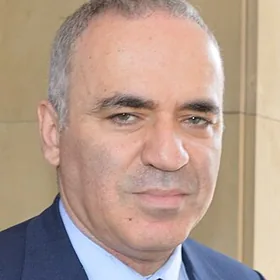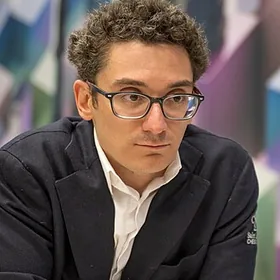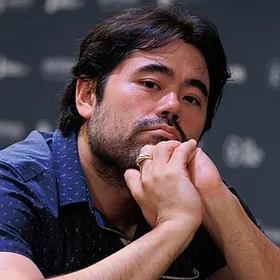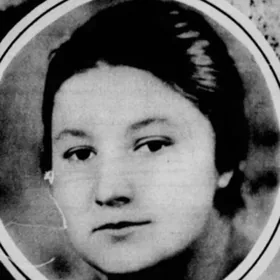
The Complete Historical Archive · 1749–Present

Chess Masters, World Champions & Women’s Trailblazers

From Philidor in eighteenth-century London and Howard Staunton’s 1851 Congress through the unbroken World Championship lineage (Wilhelm Steinitz to Gukesh Dommaraju), the complete Women’s World Championship heritage and Grandmaster trailblazers, and the British, American, and Soviet founders of computer chess. Every dossier pairs verified biography with an interactive, move-by-move annotated masterpiece.

Unbroken Classical Lineage · 1886–Present

Official World Chess Champions

Select any champion to open their monograph & board

Unbroken Women’s Championship Lineage · 1927–Present

Women’s World Champions & Grandmaster Trailblazers

Vera Menchik (1927) through Ju Wenjun, Judit Polgár & peers

From El Ajedrecista to Neural Self-Play · 1912–Present

Computer Chess Pioneers

Torres y Quevedo, Turing, Shannon, Kaissa, Belle, Deep Blue, Stockfish & AlphaZero

Interactive Study Matcher

Which Master Should You Study Next?

Classical Pioneers

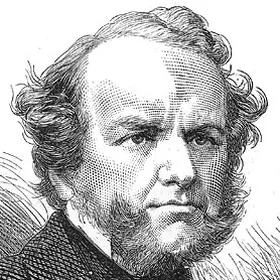
Archival portrait of Howard Staunton
United Kingdom 1810–1874

Howard Staunton

Unofficial World No. 1 (1843–1851) · Organizer of London 1851

The foremost British player of the Victorian era, Howard Staunton defeated French champion Pierre Saint-Amant in Paris (1843), organized the first international chess tournament in history at London's Great Exhibition (1851), authored 'The Chess-Player's Handbook' (1847), and endorsed Nathaniel Cooke's 1849 Staunton chessmen, still the universal FIDE tournament pattern worldwide.

Signature Repertoire: English Opening · Four Knights Game

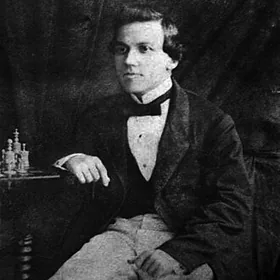
Archival portrait of Paul Morphy
United States 1837–1884

Paul Morphy

Unofficial World Champion (1858–1860)

Born in New Orleans and trained in law, Paul Morphy won the First American Chess Congress in New York (1857) before crossing the Atlantic to defeat Europe's finest masters in London and Paris. Morphy proved that classical chess rewards harmony, open files, and swift mobilization - principles crystallized forever in his 1858 Paris Opera Game.

Signature Repertoire: Italian Game (Giuoco Piano) · Ruy Lopez (Spanish Opening)

Archival portrait of Wilhelm Steinitz
WC #1 Austria / United States 1836–1900

Wilhelm Steinitz

1st Official World Chess Champion (1886–1894)

After winning the inaugural official World Chess Championship match against Johannes Zukertort across New York, St. Louis, and New Orleans in 1886, Steinitz transformed chess from romantic improvisation into a disciplined science. He demonstrated that a winning attack must be earned through positional superiority first, and produced his greatest tactical triumph at Hastings, England in 1895.

Signature Repertoire: Queen's Gambit Declined · Italian Game (Giuoco Piano)

Archival portrait of Emanuel Lasker
WC #2 Germany 1868–1941

Emanuel Lasker

2nd World Chess Champion (1894–1921 · 27-Year Record Reign)

A Doctor of Mathematics and close friend of Albert Einstein, Emanuel Lasker held the World Chess Championship for an unmatched 27 years. Lasker viewed chess as a rich human contest, famously pioneering the Double Bishop Sacrifice in Amsterdam (1889) and winning landmark tournaments in St. Petersburg (1914) and New York (1924).

Signature Repertoire: Ruy Lopez (Spanish Opening) · Queen's Gambit Declined

Archival portrait of José Raúl Capablanca
WC #3 Cuba 1888–1942

José Raúl Capablanca

3rd World Chess Champion (1921–1927)

Celebrated as 'The Human Chess Machine,' Capablanca defeated Emanuel Lasker without a single loss in Havana (1921) and went eight consecutive years (1916–1924) undefeated in tournament play. His 1921 primer 'Chess Fundamentals' remains the gold standard for players learning clear endgames and disciplined classical technique.

Signature Repertoire: Queen's Gambit Declined · Caro-Kann Defense

Archival portrait of Alexander Alekhine
WC #4 Russia / France 1892–1946

Alexander Alekhine

4th World Chess Champion (1927–1935, 1937–1946)

Born in Moscow and later a French citizen, Alexander Alekhine defeated Capablanca in their epic 34-game 1927 Buenos Aires match and remains the only World Champion to hold the title until his death. He fused Steinitzian structural mastery with relentless tactical imagination, exemplified by his 1925 Baden-Baden combination against Richard Réti.

Signature Repertoire: Queen's Gambit Declined · Slav Defense

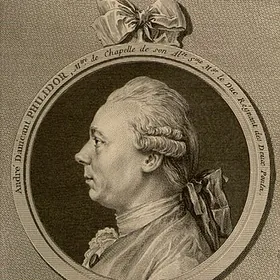
Archival portrait of François-André Danican Philidor
France / United Kingdom 1726–1795

François-André Danican Philidor

Foremost Master of the 18th Century · Author of Analyse du jeu des Échecs (1749)

A renowned operatic composer who spent his final decades in London at Parsloe’s Chess Club in St. James’s Street, Philidor revolutionized chess by declaring that pawns, not isolated piece raids, determine strategic truth. His 1749 and 1777 treatises introduced the Philidor Defense, the Philidor Rook Endgame Position, and Philidor’s Legacy smothered mate.

Signature Repertoire: Italian Game (Giuoco Piano)

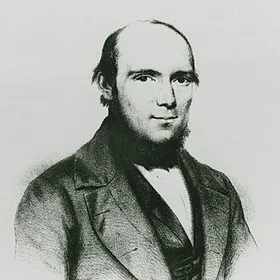
Archival portrait of Adolf Anderssen
Germany 1818–1879

Adolf Anderssen

Winner of London 1851 & London 1862 · Creator of the Immortal & Evergreen Games

A mathematics professor from Breslau, Adolf Anderssen shocked the chess world by winning Howard Staunton’s inaugural 1851 London International Tournament and repeating the triumph in London 1862. His Immortal Game (London 1851) and Evergreen Game (Berlin 1852) remain the supreme monuments of classical attacking chess.

Signature Repertoire: Italian Game (Giuoco Piano)

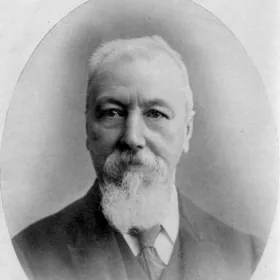
Archival portrait of Joseph Henry Blackburne
United Kingdom 1841–1924

Joseph Henry Blackburne

British Chess Legend ("The Black Death") · Winner of Berlin 1881

For over half a century, Manchester-born Joseph Henry Blackburne was the beloved titan of British chess, winning Berlin 1881 three full points ahead of Zukertort, competing at Hastings 1895, and astonishing crowds across Britain with simultaneous blindfold exhibitions well into his seventies.

Signature Repertoire: Ruy Lopez (Spanish Opening) · French Defense

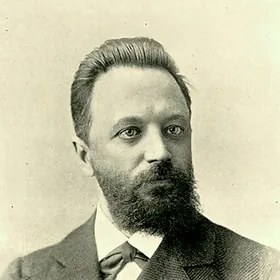
Archival portrait of Mikhail Chigorin
Russia 1850–1908

Mikhail Chigorin

Founder of the Russian Chess School · 2× World Championship Challenger (1889, 1892)

The spiritual father of the Russian and Soviet chess schools, Mikhail Chigorin challenged Wilhelm Steinitz twice for the World Championship in Havana (1889 and 1892) and finished second at Hastings 1895 ahead of Lasker and Tarrasch. His Chigorin Variation of the Ruy Lopez remains standard Grandmaster theory over a century later.

Signature Repertoire: Ruy Lopez (Spanish Opening) · Slav Defense

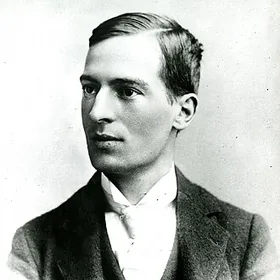
Archival portrait of Harry Nelson Pillsbury
United States 1872–1906

Harry Nelson Pillsbury

Champion of Hastings 1895 · US Champion (1897–1906)

Arriving in Hastings, England in 1895 as a virtually unknown 22-year-old from Massachusetts, Harry Nelson Pillsbury stunned the world by winning the strongest tournament of the 19th century ahead of Lasker, Steinitz, Chigorin, and Tarrasch - permanently revolutionizing how White attacks in the Queen’s Gambit Declined.

Signature Repertoire: Queen's Gambit Declined · Petrov’s Defense (Russian Game)

Archival portrait of Frank James Marshall
United States 1877–1944

Frank James Marshall

US Chess Champion for 27 Years (1909–1936) · Founder of the Marshall Chess Club

Dominant figure of American chess for three decades, Frank Marshall won Cambridge Springs 1904 ahead of World Champion Emanuel Lasker, founded Manhattan’s historic Marshall Chess Club (1915), and unveiled the famous Marshall Attack (8...d5!) in the Ruy Lopez against Capablanca in 1918.

Signature Repertoire: Ruy Lopez (Spanish Opening) · Queen's Gambit Declined

Archival portrait of Max Euwe
WC #5 Netherlands 1901–1981

Max Euwe

5th World Chess Champion (1935–1937) · FIDE President (1970–1978)

A Doctor of Mathematics and gifted educator, Max Euwe defeated Alexander Alekhine in 1935 (highlighted by his iconic Pearl of Zandvoort victory) to become the 5th World Chess Champion. Later, as FIDE President (1970–1978), he stewarded the 1972 Reykjavik World Championship and authored beloved manuals including Judgment and Planning in Chess.

Signature Repertoire: Slav Defense · Nimzo-Indian Defense

Strategic Thinkers & Challengers

Archival portrait of Akiba Rubinstein
Poland 1880–1961

Akiba Rubinstein

Greatest Endgame Virtuoso of His Era · Winner of St. Petersburg 1909 & San Sebastián 1912

Widely considered the strongest player never to contest a World Championship match (prevented by World War I), Akiba Rubinstein won five consecutive major international tournaments in 1912, created the unforgettable 1907 Rubinstein’s Immortal, and set the eternal benchmark for rook endgame technique.

Signature Repertoire: Queen's Gambit Declined · Four Knights Game · Nimzo-Indian Defense

Archival portrait of Aron Nimzowitsch
Latvia / Denmark 1886–1935

Aron Nimzowitsch

Author of My System (1925) · Father of Hypermodern Strategy & Prophylaxis

No writer changed how modern players think about chess more profoundly than Aron Nimzowitsch. In his landmark 1925 treatise My System, and over the board in victories like Carlsbad 1929 and his 1923 Immortal Zugzwang Game, he gave chess its modern vocabulary: prophylaxis, blockade, seventh-rank domination, and the Nimzo-Indian Defense.

Signature Repertoire: Nimzo-Indian Defense · Queen's Indian Defense · French Defense

Archival portrait of Samuel Reshevsky
United States 1911–1992

Samuel Reshevsky

7× US Chess Champion · 1948 World Championship Contender

A legendary child prodigy who toured Britain and the United States at age eight before becoming an accountant and seven-time US Champion, Samuel Reshevsky finished tied for third in the 1948 World Championship and battled Bobby Fischer across memorable American championship matches for decades.

Signature Repertoire: Nimzo-Indian Defense · Queen's Gambit Declined

Archival portrait of Paul Keres
Estonia / Soviet Union 1916–1975

Paul Keres

Winner of AVRO 1938 · 4× Candidates Runner-Up ("The Crown Prince of Chess")

Revered across Europe as "The Crown Prince of Chess," Estonian Grandmaster Paul Keres won the elite 1938 AVRO Tournament ahead of Alekhine, Capablanca, Botvinnik, and Euwe, won three USSR Championships, and authored Practical Chess Endings, one of the clearest endgame textbooks ever written.

Signature Repertoire: Ruy Lopez (Spanish Opening) · Queen's Indian Defense

Archival portrait of David Bronstein
Soviet Union / Ukraine 1924–2006

David Bronstein

1951 World Championship Co-Finalist (12–12 vs. Botvinnik) · Author of Zurich 1953

One of the most creative thinkers ever to sit at a chessboard, David Bronstein tied World Champion Mikhail Botvinnik 12–12 in Moscow (1951), pioneered the modern King’s Indian Defense, and authored Zurich International Chess Tournament 1953 - widely honored as the finest tournament book in chess literature.

Signature Repertoire: King's Indian Defense · Slav Defense

Archival portrait of Viktor Korchnoi
Soviet Union / Switzerland 1931–2016

Viktor Korchnoi

2× World Championship Finalist (1978, 1981) · 4× USSR Champion

Nicknamed "Viktor the Terrible" for his uncompromising fighting spirit, Viktor Korchnoi contested two unforgettable World Championship matches against Anatoly Karpov (Baguio 1978 and Merano 1981), won four USSR Championships, and continued defeating elite Grandmasters in his late seventies.

Signature Repertoire: French Defense · English Opening

Soviet School & Cold War

Archival portrait of Mikhail Botvinnik
WC #6 Soviet Union / Russia 1911–1995

Mikhail Botvinnik

6th World Chess Champion (1948–1957, 1958–1960, 1961–1963)

An electrical engineer and patriarch of the Soviet Chess School, Botvinnik won the 1948 World Championship tournament and mentored three future World Champions: Karpov, Kasparov, and Kramnik. After retiring from tournament play, he devoted decades to 'Pioneer,' an ambitious computer-chess research program exploring how grandmasters select candidate moves.

Signature Repertoire: French Defense · Nimzo-Indian Defense · English Opening

Archival portrait of Vasily Smyslov
WC #7 Soviet Union / Russia 1921–2010

Vasily Smyslov

7th World Chess Champion (1957–1958) · Three-Time World Title Challenger

Also an accomplished operatic baritone who auditioned for the Bolshoi Theatre, Vasily Smyslov approached chess with the balance and lucidity of chamber music. After winning the celebrated 1953 Zurich Candidates Tournament and contesting three World Championship matches against Mikhail Botvinnik (capturing the crown in 1957), Smyslov remained elite into his sixties, reaching the 1984 Candidates Final at age 63. His 1945 Moscow victory over Rudakovsky remains one of the clearest positional textbooks ever played.

Signature Repertoire: Ruy Lopez (Spanish Opening) · Grünfeld Defense · Slav Defense

Archival portrait of Mikhail Tal
WC #8 Soviet Union / Latvia 1936–1992

Mikhail Tal

8th World Chess Champion (1960–1961)

Celebrated worldwide as 'The Magician from Riga,' Mikhail Tal became the youngest World Champion of his era at age 23 by defeating Mikhail Botvinnik in 1960. Tal showed every generation of chess players that active pieces, open lines, and relentless practical pressure can overwhelm static material advantages.

Signature Repertoire: Sicilian Defense (Najdorf Variation) · King's Indian Defense

Archival portrait of Tigran Petrosian
WC #9 Soviet Union / Armenia 1929–1984

Tigran Petrosian

9th World Chess Champion (1963–1969)

Known as 'Iron Tigran,' Petrosian sensed an opponent's tactical and strategic threats moves before they materialized. He defeated Mikhail Botvinnik in 1963 and successfully defended his title against Boris Spassky in 1966, showcasing his famous positional exchange sacrifices and fortress-building mastery.

Signature Repertoire: Queen's Indian Defense · French Defense

Archival portrait of Boris Spassky
WC #10 Soviet Union / France 1937–2025

Boris Spassky

10th World Chess Champion (1969–1972)

Chess's first truly universal World Champion, Boris Spassky was equally lethal in the sharp King's Gambit (as in his celebrated 1960 Leningrad victory over David Bronstein, recreated in 'From Russia with Love') and deep strategic endings. After dethroning Petrosian in 1969, his sportsmanship during the 1972 Reykjavik match against Bobby Fischer earned lasting admiration across Britain and the United States.

Signature Repertoire: Ruy Lopez (Spanish Opening) · Queen's Gambit Declined

Archival portrait of Bobby Fischer
WC #11 United States 1943–2008

Bobby Fischer

11th World Chess Champion (1972–1975) · 8× US Champion

Winner of the 1963–64 US Championship with an unprecedented 11/11 perfect score and victor over Boris Spassky in Reykjavik (1972), Bobby Fischer ignited an enduring chess renaissance across the United States and the United Kingdom. Beyond his legendary games, he invented the Fischer increment digital chess clock and authored 'My 60 Memorable Games.'

Signature Repertoire: Sicilian Defense (Najdorf Variation) · Ruy Lopez (Spanish Opening) · King's Indian Defense

Archival portrait of Anatoly Karpov
WC #12 Soviet Union / Russia 1951–present

Anatoly Karpov

12th World Chess Champion (1975–1985) · 160+ Tournament Victories

One of the most dominant tournament players in chess history, Anatoly Karpov perfected the art of denying his opponent any meaningful counterplay while steadily upgrading his least active piece. His 1974 Nice Olympiad masterpiece against Wolfgang Unzicker (24. Ba7!!) remains the definitive study model for prophylaxis.

Signature Repertoire: Caro-Kann Defense · Queen's Indian Defense · Ruy Lopez (Spanish Opening)

Archival portrait of Garry Kasparov
WC #13 Soviet Union / Russia 1963–present

Garry Kasparov

13th World Chess Champion (1985–2000) · World No. 1 for 20 Years

Crowned the youngest undisputed World Champion at age 22 in Moscow (1985), Garry Kasparov held the World No. 1 ranking for two decades and stood at the historic crossroads of human intellect and computer science in his 1996–1997 matches against IBM's Deep Blue.

Signature Repertoire: Sicilian Defense (Najdorf Variation) · King's Indian Defense · Grünfeld Defense

Women's Chess Trailblazers

Archival portrait of Vera Menchik
WWC #1 United Kingdom / Czechoslovakia 1906–1944

Vera Menchik

1st Women's World Chess Champion (1927–1944 · Undefeated Reign)

Moving to Hastings, England at age 15 and training under Hungarian master Géza Maróczy, Vera Menchik won the inaugural Women's World Championship in London (1927) and remained undefeated champion for 17 years. Competing fearlessly in elite open tournaments, she defeated future World Champion Max Euwe at Hastings (1930), founding the celebrated 'Vera Menchik Club' of beaten grandmasters.

Signature Repertoire: Queen's Gambit Declined · French Defense
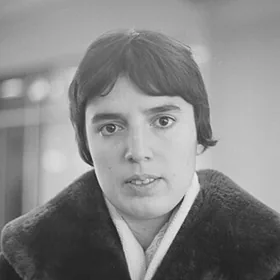
Archival portrait of Nona Gaprindashvili
WWC #5 Georgia (Soviet Union) 1941–present

Nona Gaprindashvili

5th Women's World Champion (1962–1978) · First Woman Awarded GM Title (1978)

Dominant Women's World Champion for sixteen years, Nona Gaprindashvili shattered historic barriers in 1977–1978 by tying for first place at the strong Lone Pine International in California, becoming the first woman in chess history awarded the full FIDE Grandmaster title.

Signature Repertoire: Sicilian Defense (Najdorf Variation) · Ruy Lopez (Spanish Opening)

Archival portrait of Judit Polgár
Hungary 1976–present

Judit Polgár

Strongest Female Player in History · Peaked World No. 8 (2735 Elo)

Breaking Bobby Fischer's record to become a Grandmaster at age 15 in 1991, Judit Polgár competed exclusively in open tournaments and defeated eleven current or former World Champions, including her landmark 2002 victory over World No. 1 Garry Kasparov in Moscow.

Signature Repertoire: Sicilian Defense (Najdorf Variation) · King's Indian Defense
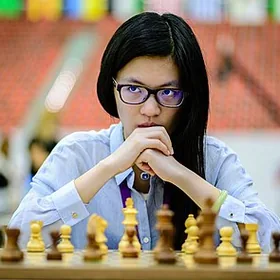
Archival portrait of Hou Yifan
WWC #13 China 1994–present

Hou Yifan

4× Women’s World Chess Champion · Oxford Rhodes Scholar · Youngest Female GM (Age 14)

Earning the full Grandmaster title at age 14 and winning four Women’s World Chess Championships (2010, 2011, 2013, 2016), Hou Yifan achieved a peak 2686 Elo rating before accepting a prestigious Rhodes Scholarship to study Public Policy at the University of Oxford and becoming a full professor at Shenzhen University.

Signature Repertoire: Sicilian Defense (Najdorf Variation) · Ruy Lopez (Spanish Opening)
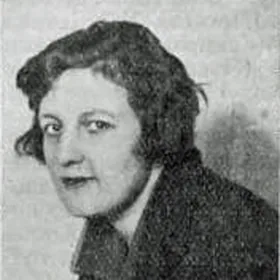
Archival portrait of Lyudmila Rudenko
WWC #2 Soviet Union / Ukraine 1904–1986

Lyudmila Rudenko

2nd Women's World Champion (1950–1953) & Wartime Hero of Leningrad

Before winning the 1950 Moscow Women’s World Championship to succeed Vera Menchik, Lyudmila Rudenko organized a train evacuation that saved hundreds of factory workers’ children from the Siege of Leningrad, an act she later called the proudest achievement of her life. Trained under Alexander Tolush and Grigory Levenfish, she inaugurated the great Soviet school of women’s chess.

Signature Repertoire: Queen's Gambit Declined · French Defense · Sicilian Defense
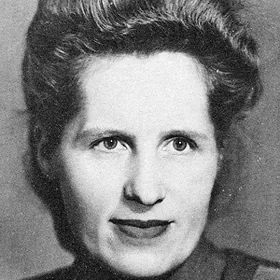
Archival portrait of Elisaveta Bykova
WWC #3 Soviet Union 1913–1989

Elisaveta Bykova

3rd Women's World Champion & First Woman to Regain the World Crown

Elisaveta Bykova captured the Women’s World Championship in 1953 by defeating Lyudmila Rudenko in Leningrad, and then made history in 1958 by becoming the first woman ever to reclaim the world title in a rematch against Olga Rubtsova. An economist, journalist, and historian of women’s chess, she authored foundational biographies of Vera Menchik and Soviet women champions.

Signature Repertoire: Sicilian Defense · Ruy Lopez · Queen's Gambit Declined
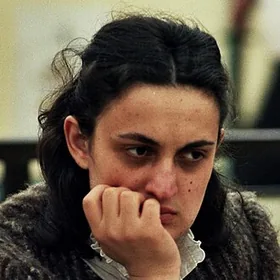
Archival portrait of Maia Chiburdanidze
WWC #6 Georgia / Soviet Union b. 1961

Maia Chiburdanidze

6th Women's World Champion (1978–1991) & 9-Time Olympiad Gold Medalist

At just seventeen years of age in 1978, Maia Chiburdanidze defeated Nona Gaprindashvili to become the youngest Women’s World Chess Champion of her era, holding the crown for thirteen unbroken years across four successful title defenses. Awarded the full FIDE Grandmaster title in 1984, only the second woman in history to achieve it, she routinely defeated top male Soviet Grandmasters in open competition.

Signature Repertoire: Sicilian Defense · Ruy Lopez · King's Indian Defense
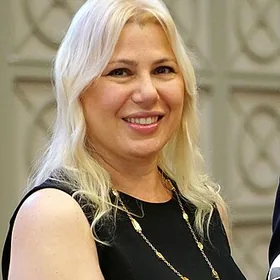
Archival portrait of Susan Polgár
WWC #8 Hungary / United States b. 1969

Susan Polgár

8th Women's World Champion & First Woman to Earn Full GM by Tournament Norms

In January 1991, Susan (Zsuzsa) Polgár shattered one of chess’s last historic barriers by becoming the first woman ever to earn the full FIDE Grandmaster title through traditional tournament norms and Elo rating. After winning the Women’s World Championship in 1996 and four Olympiad team golds, she settled in the United States, founding the Susan Polgár Foundation and building championship collegiate dynasties at Texas Tech and Webster University.

Signature Repertoire: English Opening · Sicilian Defense · French Defense

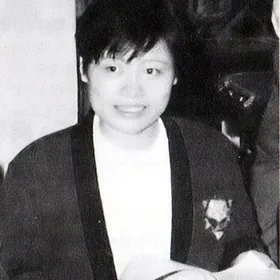
Archival portrait of Xie Jun
WWC #7 China b. 1970

Xie Jun

7th Women's World Champion & Architect of the Chinese Chess Renaissance

When twenty-one-year-old Xie Jun defeated Maia Chiburdanidze in Manila in 1991, she ended forty-one years of Soviet and Georgian dominance in women’s chess and sparked the Chinese chess renaissance that later produced Hou Yifan, Ju Wenjun, and World Champion Ding Liren. A two-time Women’s World Champion (1991–1996, 1999–2001) and full FIDE Grandmaster, she later earned a doctorate in psychology and led Chinese chess administration.

Signature Repertoire: Ruy Lopez · Sicilian Defense · Caro-Kann Defense
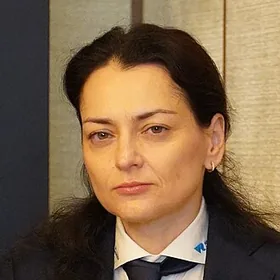
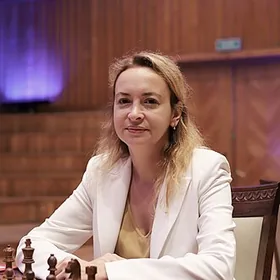
Archival portrait of Alexandra Kosteniuk
WWC #12 Switzerland / Russia b. 1984

Alexandra Kosteniuk

12th Women's World Champion, World Rapid Champion & World Cup Winner

Known throughout the chess world as the “Chess Queen,” Alexandra Kosteniuk earned the full FIDE Grandmaster title in 2004 and captured the Women’s World Championship in Nalchik in 2008 by defeating Pia Cramling and Hou Yifan. Thirteen years later, she proved her remarkable longevity by winning both the inaugural FIDE Women’s World Cup and the FIDE Women’s World Rapid Championship in 2021.

Signature Repertoire: Ruy Lopez · Sicilian Defense · Italian Game

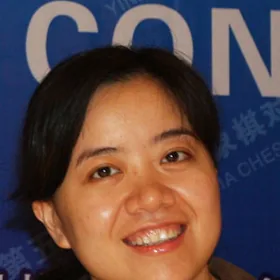
Archival portrait of Ju Wenjun
WWC #17 China b. 1991

Ju Wenjun

Reigning Five-Time Women's World Chess Champion (2018–Present)

Ju Wenjun is the defining Women’s World Chess Champion of the modern era, having captured the crown in May 2018 and defended it successfully in 2018, 2020, 2023, and 2025, a five-time championship reign matched by only a handful of legends in chess history. Awarded the full FIDE Grandmaster title in 2014, she is celebrated for her nerves of steel, winning the decisive final classical game on demand against Lei Tingjie in 2023.

Signature Repertoire: Queen's Gambit Declined · English Opening · Ruy Lopez

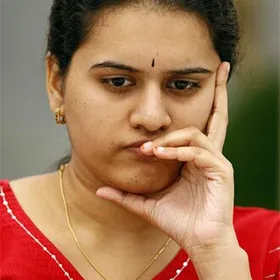
Archival portrait of Koneru Humpy
India b. 1987

Koneru Humpy

Full FIDE Grandmaster & Two-Time Women's World Rapid Champion (2019, 2024)

In 2002, at just fifteen years and one month old, Koneru Humpy broke Judit Polgár’s record to become the youngest woman in history to achieve the full FIDE Grandmaster title. Only the second woman ever to cross the 2600 Elo milestone (peaking at 2623), she returned after motherhood to win the Women’s World Rapid Chess Championship twice, in Moscow (2019) and New York (2024).

Signature Repertoire: Queen's Gambit Accepted · Queen's Gambit Declined · Sicilian Defense

Archival portrait of Pia Cramling
Sweden b. 1963

Pia Cramling

Full FIDE Grandmaster (1992) & Four-Decade Icon of European Chess

One of the most respected figures in world chess, Swedish Grandmaster Pia Cramling became the fifth woman in history to earn the full FIDE Grandmaster title (1992) and reached World No. 1 among women in 1984. Across more than forty years of top-level competition, she won two European Individual Women’s Championships (2003, 2010) and captured individual Olympiad gold on Board 1 at age fifty-nine in Chennai 2022.

Signature Repertoire: Caro-Kann Defense · Queen's Gambit Declined · English Opening

Archival portrait of Antoaneta Stefanova
WWC #10 Bulgaria b. 1979

Antoaneta Stefanova

10th Women's World Champion & Women's World Rapid Champion (2012)

Bulgarian Grandmaster Antoaneta Stefanova earned the full FIDE Grandmaster title in 2002, won the European Women’s Championship the same year, and captured the 10th Women’s World Chess Championship in Elista in 2004. Adding the 2012 Women’s World Rapid Championship to her classical crown, she remains one of the most dangerous tactical technicians in international tournament chess.

Signature Repertoire: Queen's Gambit Declined · French Defense · Sicilian Defense

Archival portrait of Irina Krush
United States b. 1983

Irina Krush

Eight-Time U.S. Women's Champion & Full FIDE Grandmaster

Born in Odessa and raised in Brooklyn, Irina Krush won her first U.S. Women’s Chess Championship at age fourteen in 1998, the youngest champion in American history, and went on to capture an extraordinary eight national titles (1998, 2007, 2010, 2012, 2013, 2014, 2015, and 2020). Earning the full FIDE Grandmaster title in 2013, she also made international headlines in 1999 as chief analyst for the World Team in “Kasparov versus the World.”

Signature Repertoire: Queen's Gambit Declined · Sicilian Defense · English Opening

Archival portrait of Jovanka Houska
United Kingdom b. 1980

Jovanka Houska

Nine-Time British Women's Champion, International Master & Acclaimed Author

London-born International Master and Woman Grandmaster Jovanka Houska is the premier British women’s chess champion of the twenty-first century, having captured the British Women’s Championship an extraordinary nine times. A pillar of the English Olympiad team and celebrated author of modern opening classics including Play the Caro-Kann, she has defeated former World Championship Candidates including GM Jonathan Speelman at the historic Staunton Memorial in London.

Signature Repertoire: Caro-Kann Defense · French Defense · Queen's Gambit Declined
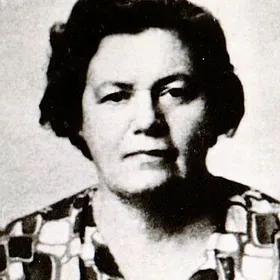
Archival portrait of Olga Rubtsova
WWC #4 Soviet Union 1909–1994

Olga Rubtsova

4th Women's World Champion (1956–1958) & First Women's Correspondence Champion

Metallurgical engineer and five-time Soviet Women’s Champion Olga Rubtsova captured the fourth Women’s World Chess Championship in 1956 by edging out both Elisaveta Bykova and Lyudmila Rudenko in Moscow’s grueling triangular match-tournament. Later, in 1972, she won the inaugural ICCF Women’s Correspondence World Championship, a dual over-the-board and correspondence feat never equaled.

Signature Repertoire: Sicilian Defense · French Defense · Queen's Gambit Declined
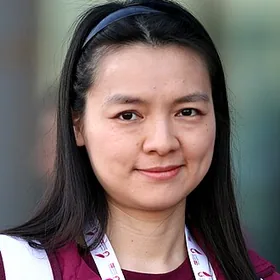
Archival portrait of Zhu Chen
WWC #9 China / Qatar b. 1976

Zhu Chen

9th Women's World Champion (2001–2004) & Full FIDE Grandmaster

Chinese-born Grandmaster Zhu Chen announced her arrival by winning the World Girls Under-12 Championship (1988) and two World Junior Girls Championships (1994, 1996) before defeating Alexandra Kosteniuk in a thrilling 2001 Moscow final to become the ninth Women’s World Chess Champion. She became China’s second female full Grandmaster in 2001 and later represented Qatar while contributing globally to FIDE governance.

Signature Repertoire: Queen's Gambit Declined · Sicilian Defense · Dutch Defense

Archival portrait of Xu Yuhua
WWC #11 China b. 1976

Xu Yuhua

11th Women's World Champion (2006–2008) & Two-Time Women's World Cup Winner

A law graduate of Peking University, Xu Yuhua won the first two FIDE Women’s World Cups (2000 and 2002) and then achieved one of the most memorable feats in championship history by winning the 2006 Women’s World Chess Championship in Yekaterinburg undefeated, defeating Alisa Galliamova in the final while three months pregnant. She earned the full FIDE Grandmaster title with her triumph and won three consecutive Olympiad team golds with China.

Signature Repertoire: English Opening · Ruy Lopez · Queen's Indian Defense

Archival portrait of Anna Ushenina
WWC #14 Ukraine b. 1985

Anna Ushenina

14th Women's World Champion (2012–2013) & European Women's Champion (2016)

Kharkiv-born Ukrainian Grandmaster Anna Ushenina stunned the chess world in December 2012 by winning the 64-player Women’s World Chess Championship in Khanty-Mansiysk, defeating Anna Muzychuk, Nadezhda Kosintseva, Ju Wenjun, and Antoaneta Stefanova to become Ukraine’s first Women’s World Champion. She later captured the 2016 European Individual Women’s Championship and anchored Ukraine’s gold-medal Olympiad teams.

Signature Repertoire: Catalan Opening · Queen's Gambit Declined · Slav Defense

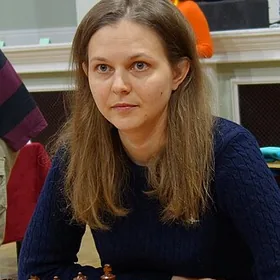
Archival portrait of Mariya Muzychuk
WWC #15 Ukraine b. 1992

Mariya Muzychuk

15th Women's World Champion (2015–2016) & Full FIDE Grandmaster

In April 2015 in Sochi, twenty-two-year-old Ukrainian Grandmaster Mariya Muzychuk defeated Koneru Humpy, Harika Dronavalli, and Natalija Pogonina to claim the fifteenth Women’s World Chess Championship crown and earn the full FIDE Grandmaster title. Alongside her sister Anna Muzychuk, she propelled Ukraine to Women’s Chess Olympiad gold in Chennai 2022 and remains a fixture in the FIDE Women’s Candidates cycle.

Signature Repertoire: Ruy Lopez · Sicilian Defense · Italian Game

Archival portrait of Tan Zhongyi
WWC #16 China b. 1991

Tan Zhongyi

16th Women's World Champion (2017–2018), World Rapid Champion & 2024 Candidates Winner

Chongqing-born Grandmaster Tan Zhongyi won the sixteenth Women’s World Chess Championship in Tehran in 2017 by defeating Anna Muzychuk in a dramatic tiebreak final, earning the full FIDE Grandmaster title. Proving her enduring world-class stature, she later captured the 2022 FIDE Women’s World Rapid Championship in Almaty and dominated the 2024 FIDE Women’s Candidates Tournament in Toronto with an undefeated 9/14 score.

Signature Repertoire: Slav Defense · Queen's Gambit Declined · English Opening

Archival portrait of Anna Muzychuk
Ukraine b. 1990

Anna Muzychuk

Full FIDE Grandmaster, World Rapid & Blitz Champion (2016) & World Finalist

Ukrainian Grandmaster Anna Muzychuk became only the fourth woman in chess history to cross 2600 Elo (peaking at 2606) and achieved the remarkable Doha double in December 2016, winning both the FIDE Women’s World Rapid and Women’s World Blitz Championships in the same week. Runner-up in the 2017 Women’s World Championship final in Tehran, she also won Olympiad team gold with Ukraine alongside her sister Mariya in Chennai 2022.

Signature Repertoire: Ruy Lopez · Sicilian Defense (Najdorf Variation) · Italian Game (Giuoco Piano)

Archival portrait of Aleksandra Goryachkina
Russia / FIDE b. 1998

Aleksandra Goryachkina

Full FIDE Grandmaster, 2023 Women's World Cup Winner & 2020 WC Challenger

Two-time World Junior Girls Champion Aleksandra Goryachkina earned the full FIDE Grandmaster title in 2018, stormed through the 2019 FIDE Women’s Candidates Tournament, and pushed reigning champion Ju Wenjun all the way to rapid tiebreaks in the 2020 Women’s World Championship Match. Peaking at 2611 Elo, fifth-highest in women’s chess history, she captured the 2023 FIDE Women’s World Cup in Baku and three Russian Women’s Superfinals.

Signature Repertoire: Queen's Gambit Declined · Catalan Opening · Slav Defense

Archival portrait of Kateryna Lagno
Ukraine / FIDE b. 1989

Kateryna Lagno

Full FIDE Grandmaster, 3× World Blitz Champion & World Rapid Champion

Born in Lviv, Kateryna Lagno earned the Woman Grandmaster title at age twelve (a world record at the time) and the full FIDE Grandmaster title in 2007. A two-time European Individual Women’s Champion (2005, 2008), she won the 2014 Women’s World Rapid Championship, captured an extraordinary three Women’s World Blitz Championships (2010, 2018, 2019), and reached the final of the 2018 Women’s World Championship.

Signature Repertoire: Catalan Opening · Ruy Lopez · Sicilian Defense (Najdorf Variation)
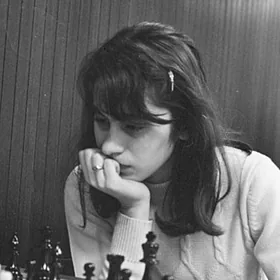
Archival portrait of Nana Alexandria
Georgia / Soviet Union b. 1949

Nana Alexandria

Two-Time Women's World Championship Challenger (1975, 1981) & 6× Olympiad Gold

Alongside Nona Gaprindashvili and Maia Chiburdanidze, Nana Alexandria formed the famous Georgian triumvirate that dominated world women’s chess for three decades. Three-time Soviet Women’s Champion (1966, 1968, 1969), she won two Candidates cycles to contest the 1975 Women’s World Championship against Gaprindashvili and tied the unforgettable 1981 Borjomi/Tbilisi championship match 8–8 against Chiburdanidze. She also won six Women’s Olympiad team gold medals.

Signature Repertoire: Sicilian Defense (Najdorf Variation) · French Defense · King's Indian Defense

Archival portrait of Lei Tingjie
China b. 1997

Lei Tingjie

Full FIDE Grandmaster, 2022–23 Candidates Winner & 2023 World Finalist

Chongqing-born Grandmaster Lei Tingjie earned the full FIDE Grandmaster title in 2017, won the 2021 FIDE Women’s Grand Swiss in Riga, and swept through the 2022–23 FIDE Women’s Candidates knockout, defeating Mariya Muzychuk, Anna Muzychuk, and Tan Zhongyi, to challenge Ju Wenjun in the 2023 Women’s World Championship Match. A pillar of China’s modern Olympiad dynasty, she combines deep classical preparation with calm competitive focus.

Signature Repertoire: Italian Game (Giuoco Piano) · Queen's Gambit Declined · Ruy Lopez

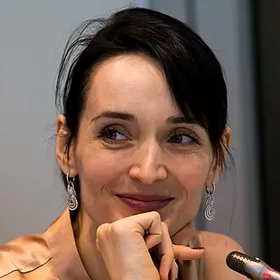
Archival portrait of Sofia Polgár
Hungary / Israel b. 1974

Sofia Polgár

International Master, Visual Artist & Heroine of the 1989 "Sack of Rome"

The middle Polgár sister, completing chess’s most celebrated family trio alongside Susan and Judit, Sofia Polgár stunned the chess world at age fourteen in February 1989 at the Magistrale di Roma. Scoring 8.5 out of 9 against a field of seasoned Soviet and European Grandmasters (defeating Palatnik, Suba, Chernin, and Bareev), she produced a legendary 2879 performance rating dubbed "The Sack of Rome." A two-time Women’s Olympiad team gold medalist with Hungary who reached a peak FIDE rating of 2505, she later settled in Israel with Grandmaster and surgeon Yona Kosashvili and built an acclaimed second career as a fine artist, illustrator, and chess educator.

Signature Repertoire: Sicilian Defense (Najdorf Variation) · Italian Game (Giuoco Piano) · Ruy Lopez
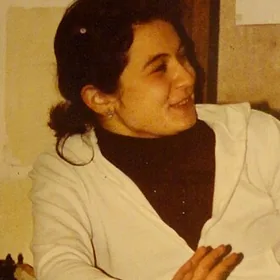
Archival portrait of Nana Ioseliani
Georgia / Soviet Union b. 1962

Nana Ioseliani

Two-Time Women's World Championship Challenger (1988, 1993) & 5× Olympiad Gold

Another luminous pillar of Georgia’s golden generation, Nana Ioseliani won the Soviet Women’s Championship four times (1981, 1982, 1986, 1987) and twice won the Candidates cycle to contest the Women’s World Championship, pushing Maia Chiburdanidze to a razor-thin 8.5–7.5 margin in Telavi 1988 and challenging Xie Jun in Monaco 1993. She captured five Women’s Chess Olympiad team gold medals with the USSR and Georgia.

Signature Repertoire: Queen's Gambit Accepted · Caro-Kann Defense · Sicilian Defense (Najdorf Variation)
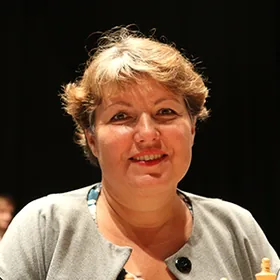
Archival portrait of Alisa Galliamova
Russia / Soviet Union b. 1972

Alisa Galliamova

Two-Time Women's World Championship Finalist (1999, 2006) & 3× Russian Champion

Kazan-born International Master and Woman Grandmaster Alisa Galliamova reached the pinnacle of championship chess twice, finishing runner-up in the 1999 Women’s World Championship Match against Xie Jun (held jointly in Kazan and Shenyang) and again reaching the final of the 2006 Women’s World Championship in Yekaterinburg. A three-time Russian Women’s Champion (1997, 2009, 2010), she also won Women’s Chess Olympiad gold with Russia in 2010.

Signature Repertoire: Ruy Lopez · Queen's Gambit Declined · French Defense

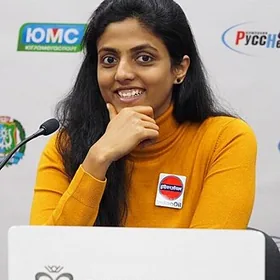
Archival portrait of Harika Dronavalli
India b. 1991

Harika Dronavalli

Full FIDE Grandmaster, 3× World Championship Bronze & 2024 Olympiad Gold

Only the second Indian woman ever to earn the full FIDE Grandmaster title (2011), Harika Dronavalli won three consecutive Women’s World Championship bronze medals (2012, 2015, 2017), triumphed at the 2016 FIDE Women’s Grand Prix in Chengdu, and led India on Board 1 to its historic Women’s Chess Olympiad gold medal in Budapest 2024.

Signature Repertoire: Italian Game (Giuoco Piano) · Queen's Gambit Declined · Slav Defense

Archival portrait of Vaishali Rameshbabu
India b. 2001

Vaishali Rameshbabu

Full FIDE Grandmaster, 2023 Women's Grand Swiss Winner & 2024 Olympiad Gold

Chennai-born Grandmaster Vaishali Rameshbabu won the prestigious 2023 FIDE Women’s Grand Swiss on the Isle of Man unbeaten, crossed 2500 Elo to become India’s third female full FIDE Grandmaster (forming chess’s first brother–sister Grandmaster pair with R. Praggnanandhaa), and helped power India to historic Women’s Olympiad gold in Budapest 2024.

Signature Repertoire: Sicilian Defense (Najdorf Variation) · Italian Game (Giuoco Piano) · Queen's Gambit Declined
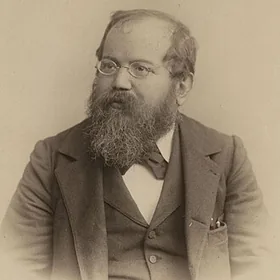
UK, US & Modern Icons

Archival portrait of Nigel Short
United Kingdom 1965–present

Nigel Short

1993 World Championship Finalist · Peaked World No. 3

The first British player to contest a World Chess Championship match (London 1993 against Garry Kasparov), Nigel Short defeated both Anatoly Karpov and Jan Timman in the Candidates cycle and produced one of modern chess's most celebrated masterpieces, his immortal King Walk against Timman at Tilburg (1991).

Signature Repertoire: Ruy Lopez (Spanish Opening) · French Defense

Archival portrait of Michael Adams
United Kingdom 1971–present

Michael Adams

9× British Champion · Peaked World No. 4 (2761 Elo)

Born in Truro, Cornwall, 'Mickey' Adams has been the bedrock of British elite chess for over thirty years, winning nine British Championships, reaching the 2004 FIDE World Championship final, and earning worldwide respect for his effortless positional touch and nerve under time pressure.

Signature Repertoire: Ruy Lopez (Spanish Opening) · Caro-Kann Defense

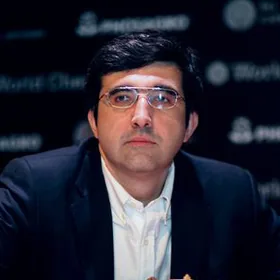
Archival portrait of Vladimir Kramnik
WC #14 Russia 1975–present

Vladimir Kramnik

14th World Chess Champion (2000–2007)

Dethroning Garry Kasparov without losing a single game in London (2000), Vladimir Kramnik reshaped 21st-century opening theory by reviving both the Berlin Defense and the Catalan Opening - demonstrating that surgical structural precision can neutralize even the fiercest dynamic attackers.

Signature Repertoire: Catalan Opening · Petrov's Defense (Russian Game) · Slav Defense

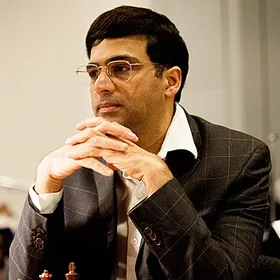
Archival portrait of Viswanathan Anand
WC #15 India 1969–present

Viswanathan Anand

15th World Chess Champion (2007–2013) · 5× World Champion

India's first Grandmaster and a five-time World Champion across knockout, tournament, and match formats, Viswanathan Anand combined rapid calculation with deep classical understanding - highlighted by his dazzling 2013 Wijk aan Zee victory over Levon Aronian.

Signature Repertoire: Sicilian Defense (Najdorf Variation) · Slav Defense · Ruy Lopez (Spanish Opening)

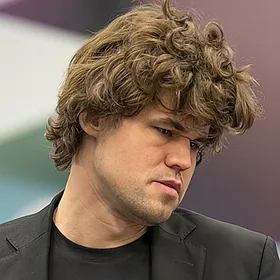
Archival portrait of Magnus Carlsen
WC #16 Norway 1990–present

Magnus Carlsen

16th World Chess Champion (2013–2023) · Peak 2882 Elo (Highest in History)

Achieving the highest classical FIDE rating ever recorded (2882), Magnus Carlsen won five consecutive World Chess Championships (Chennai 2013 through Dubai 2021) by proving that deep practical understanding of piece harmony and endgames outweighs sterile opening memorization.

Signature Repertoire: Italian Game (Giuoco Piano) · Catalan Opening · Sicilian Defense (Sveshnikov Variation)

Archival portrait of Fabiano Caruana
United States 1992–present

Fabiano Caruana

2018 World Championship Challenger · Peak 2844 Elo (3rd Highest Ever)

Winner of the historic 2014 Sinquefield Cup with an astonishing 8.5/10 score and unbeaten across all twelve classical games of the 2018 London World Championship match against Magnus Carlsen, Fabiano Caruana stands among the greatest classical competitors in American chess history.

Signature Repertoire: Petrov's Defense (Russian Game) · Sicilian Defense (Sveshnikov Variation) · Catalan Opening

Archival portrait of Hikaru Nakamura
United States 1987–present

Hikaru Nakamura

5× US Champion · Fischer Random World Champion (2022)

A five-time United States Chess Champion, Tata Steel Wijk aan Zee winner (2011), and 2022 FIDE Fischer Random World Champion, Hikaru Nakamura has introduced millions of modern learners to serious chess calculation while competing at the summit of classical chess.

Signature Repertoire: King's Indian Defense · Italian Game (Giuoco Piano)

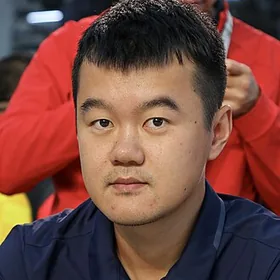
Archival portrait of Ding Liren
WC #17 China 1992–present

Ding Liren

17th World Chess Champion (2023–2024) · 100-Game Classical Unbeaten Streak

China’s first undisputed World Chess Champion, Ding Liren compiled a remarkable 100-game classical unbeaten streak (2017–2018) and defeated Ian Nepomniachtchi in the 2023 Astana World Championship tiebreak, immortalized by his bold self-pin 46...Rg6!! declining a draw to play for the world crown.

Signature Repertoire: Catalan Opening · Ruy Lopez (Spanish Opening)

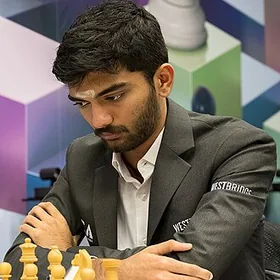
Archival portrait of Gukesh Dommaraju
WC #18 India 2006–present

Gukesh Dommaraju

18th & Youngest World Chess Champion in History (Crowned Age 18, Singapore 2024)

Winning the 2024 Toronto Candidates Tournament at age 17 and defeating Ding Liren 7.5–6.5 in Singapore (December 2024), Gukesh Dommaraju shattered Garry Kasparov’s nearly 40-year record to become the youngest undisputed World Chess Champion in chess history.

Signature Repertoire: Italian Game (Giuoco Piano) · Catalan Opening

Computer Chess Pioneers

Archival portrait of Alan Turing
United Kingdom 1912–1954

Alan Turing

Author of Turochamp (1948) - World's First Chess Algorithm

At Bletchley Park and the University of Manchester, mathematician Alan Turing co-designed 'Turochamp' in 1948, the first complete computer chess algorithm in human history. Because no computer in Manchester could yet execute it, Turing hand-calculated every move of Turochamp on paper against his colleague Alick Glennie in 1952, a game you can replay move-for-move right here.

Signature Repertoire: Italian Game (Giuoco Piano)

Archival portrait of Claude Shannon
United States 1916–2001

Claude Shannon

Bell Labs · Author of 'Programming a Computer for Playing Chess' (1950)

The father of information theory published his landmark 1950 Bell Labs paper defining the mathematical framework, static evaluation, minimax search, and quiescence, that still governs classical chess engines like GetChess's built-in engine today. He also estimated the famous Shannon Number (roughly 10^120 possible chess games).

Signature Repertoire: Queen's Gambit Declined

Archival portrait of Ken Thompson
United States 1943–present

Ken Thompson

Bell Labs · Co-Creator of Unix & 'Belle' (1980 World Computer Champion)

Alongside co-creating Unix and the B/C language lineage at Bell Labs, Ken Thompson built 'Belle' with Joe Condon, the first computer program to achieve a US Chess Federation Master rating (1983), and pioneered retrograde endgame tablebases that solved complex 5- and 6-piece endings with mathematical certainty.

Signature Repertoire: Ruy Lopez (Spanish Opening)

Archival portrait of Vladimir Arlazarov & Mikhail Donskoy (Kaissa)
Soviet Union / Russia 1971–1974 (Stockholm World Champion)

Vladimir Arlazarov & Mikhail Donskoy (Kaissa)

Architects of Kaissa - 1st World Computer Chess Champion (1974)

Created at Moscow's Institute of Control Sciences (building on Georgy Adelson-Velsky's early ITEP chess program), 'Kaissa' swept the inaugural World Computer Chess Championship in Stockholm (1974) with a spotless 4–0 score. Its 64-bit bitboard representation remains the foundational data structure of every elite chess engine built since.

Signature Repertoire: English Opening

Archival portrait of Leonardo Torres y Quevedo
Spain 1852–1936

Leonardo Torres y Quevedo

Inventor of El Ajedrecista (1912) - First True Chess Automaton

More than thirty years before electronic digital computers existed, Spanish engineer and mathematician Leonardo Torres y Quevedo built El Ajedrecista in 1912, an electromechanical machine that played King and Rook against a human player’s lone King from any starting position and delivered checkmate automatically without human intervention.

Signature Repertoire: Queen Pawn Game

Archival portrait of John von Neumann
Hungary / United States 1903–1957

John von Neumann

Author of the Minimax Theorem (1928) & Stored-Program Architecture

Hungarian-American polymath John von Neumann proved the 1928 Minimax Theorem and co-authored Theory of Games and Economic Behavior (1944), establishing the mathematical foundation for adversarial tree search. His stored-program computer architecture also powered the Los Alamos MANIAC I, which played the first complete machine-executed chess game in 1956.

Signature Repertoire: Queen's Gambit Declined

Archival portrait of Norbert Wiener
United States 1894–1964

Norbert Wiener

MIT Mathematician & Founder of Cybernetics (1948)

MIT mathematician Norbert Wiener founded cybernetics in 1948 and wrote one of the earliest published technical discussions of how a computer could play chess by combining lookahead search with adaptive position evaluation. At the 1951 Paris Cybernetics Congress, Wiener famously played against Torres y Quevedo’s El Ajedrecista.

Signature Repertoire: Italian Game (Giuoco Piano)

Archival portrait of Herbert A. Simon
United States 1916–2001

Herbert A. Simon

Nobel Laureate, Turing Award Winner & Chess Cognition Pioneer

Nobel Laureate and Turing Award winner Herbert A. Simon co-created the 1958 Newell-Shaw-Simon (NSS) chess program and pioneered the cognitive science of chess mastery. Alongside William Chase, Simon demonstrated that grandmasters recognize tens of thousands of recurring board patterns ("chunks") rather than calculating blindly.

Signature Repertoire: Ruy Lopez (Spanish Opening)

Archival portrait of Allen Newell
United States 1927–1992

Allen Newell

Turing Award Winner & Co-Architect of NSS (1958) Chess Program

Carnegie Mellon computer scientist Allen Newell authored the 1955 paper "The Chess Machine" and co-built the Newell-Shaw-Simon (NSS) program in 1958, one of the first full-board computer chess engines and an early pioneer of alpha-beta cutoffs and selective tactical goals.

Signature Repertoire: Queen Pawn Game

Archival portrait of John McCarthy
United States 1927–2011

John McCarthy

Coined "Artificial Intelligence" & Formalized Alpha-Beta Pruning

Stanford and MIT pioneer John McCarthy coined the term "Artificial Intelligence" in 1955, formalized the alpha-beta pruning algorithm that powers classical chess search, and guided Alan Kotok’s MIT chess program into the historic 1966–1967 telegraph match against Moscow’s ITEP program.

Signature Repertoire: Italian Game (Giuoco Piano)

Archival portrait of Richard Greenblatt
United States 1944–present

Richard Greenblatt

MIT · Author of Mac Hack VI (1967), First Tournament Chess Engine

Working at MIT’s AI Lab, Richard Greenblatt created Mac Hack VI in 1967, the first computer chess program to compete in an official USCF human tournament and defeat a rated tournament player (scoring a USCF rating around 1400–1500). Mac Hack VI also popularized transposition tables to avoid re-evaluating identical board positions.

Signature Repertoire: Sicilian Defense (Alapin Variation)

Archival portrait of Donald Knuth
United States 1938–present

Donald Knuth

Stanford · Turing Award Winner & Co-Author of Alpha-Beta Analysis (1975)

Stanford computer scientist Donald E. Knuth, author of The Art of Computer Programming and 1974 Turing Award laureate, co-authored the landmark 1975 paper "An Analysis of Alpha-Beta Pruning" with Ronald Moore. Their theorem proved how optimal move ordering squares the effective search depth of chess programs.

Signature Repertoire: Queen's Gambit Declined

Archival portrait of David Levy
United Kingdom 1945–present

David Levy

Scottish IM, ICGA President & Winner of the 1968–1978 Chess Wager

Scottish International Master David Levy famously wagered leading AI professors in 1968 that no computer program would defeat him in a match within ten years. He won the bet in 1978 by defeating Chess 4.7 in Toronto using patient anti-computer strategy, co-authored How Computers Play Chess, and later served as President of the International Computer Games Association.

Signature Repertoire: Sicilian Defense (Alapin Variation) · English Opening

Archival portrait of Feng-hsiung Hsu & Murray Campbell (Deep Blue)
Taiwan / Canada / United States 1985–1997 (Philadelphia & New York)

Feng-hsiung Hsu & Murray Campbell (Deep Blue)

IBM Architects of Deep Blue - First Machine to Defeat a World Champion

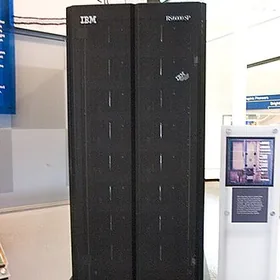
Beginning with ChipTest and Deep Thought at Carnegie Mellon University before joining IBM Research alongside Joe Hoane, Feng-hsiung Hsu and Murray Campbell engineered Deep Blue. Evaluating 200 million positions per second across custom chess chips, Deep Blue won Game 1 in Philadelphia (1996) and defeated World Champion Garry Kasparov 3.5–2.5 in New York (1997).

Signature Repertoire: Sicilian Defense (Alapin Variation) · Caro-Kann Defense

Archival portrait of Jonathan Schaeffer
Canada 1957–present

Jonathan Schaeffer

University of Alberta · Inventor of the History Heuristic & Phoenix

University of Alberta computer scientist Jonathan Schaeffer created the chess program Phoenix (finishing joint first in the 1986 World Computer Chess Championship) and introduced the History Heuristic in 1983, a lightweight move-ordering method still used inside virtually every alpha-beta chess engine. He later led the Chinook team that mathematically solved checkers.

Signature Repertoire: Ruy Lopez (Spanish Opening)

Archival portrait of Tord Romstad, Marco Costalba & Joona Kiiski (Stockfish)
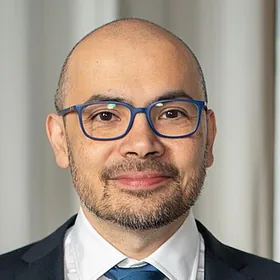
Norway / Italy / Finland 2008–present

Tord Romstad, Marco Costalba & Joona Kiiski (Stockfish)

Creators of Stockfish - Open-Source Chess Engine Revolution

Launched in 2008 by Marco Costalba from Tord Romstad’s open-source Glaurung engine and developed alongside Joona Kiiski and hundreds of open-source contributors, Stockfish became the strongest chess engine in the world. By combining ultra-fast alpha-beta search with Yu Nasu’s Efficiently Updatable Neural Networks (NNUE) in 2020, Stockfish democratized grandmaster-grade analysis for every student on earth.

Signature Repertoire: Ruy Lopez (Spanish Opening) · Sicilian Najdorf

Archival portrait of Demis Hassabis (DeepMind & AlphaZero)
United Kingdom 1976–present

Demis Hassabis (DeepMind & AlphaZero)

2024 Nobel Laureate, DeepMind Co-Founder & Architect of AlphaZero

A former British chess prodigy ranked world number two under age fourteen, Demis Hassabis co-founded DeepMind in London and led the team (with David Silver and colleagues) that created AlphaZero in 2017. Learning chess solely through self-play without human games, AlphaZero revolutionized modern grandmaster theory with long-term positional sacrifices and relentless h-pawn attacks. Hassabis was awarded the 2024 Nobel Prize in Chemistry for AlphaFold.

Signature Repertoire: Queen's Indian Defense · English Opening

Support GetChess

GetChess is free to read and study. Supporters are listed on our Founding Members page.

Founding Members & Supporters →