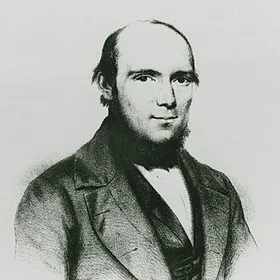
Adolf Anderssen
Winner of London 1851 & London 1862 · Creator of the Immortal & Evergreen Games
A mathematics professor from Breslau, Adolf Anderssen shocked the chess world by winning Howard Staunton’s inaugural 1851 London International Tournament and repeating the triumph in London 1862. His Immortal Game (London 1851) and Evergreen Game (Berlin 1852) remain the supreme monuments of classical attacking chess.
Portrait: Archival Portrait · Public domain
Interactive Demonstration
The Evergreen Game (1852)
Adolf Anderssen vs. Jean Dufresne · Berlin (Casual) · ECO C52 (1-0)
Strategic Portrait
Playing Style & Contribution
Fearless romantic imagination, rapid open-file attacks, and timeless tactical combinations.
Verified Career Milestones
- 1851: Won the first International Chess Tournament in London and played The Immortal Game.
- 1852: Played The Evergreen Game against Jean Dufresne in Berlin.
- 1862: Won the London International Tournament again (+11 -2 =0).
Practical Application
Lessons You Can Apply Today
- Quiet preparatory moves (like 19. Rad1!! in the Evergreen Game) are often more lethal than premature checks.
- In open gambits, time and active pieces outweigh material.
- Coordinate your bishops and knights around an uncastled king before it can escape.
Essential Reading
The Immortal Game: A History of Chess - David Shenk
Anchor Books · ISBN 1400034086
Purchase Book on AmazonSignature Openings Studied by Adolf Anderssen
Contemporaries & Era Peers
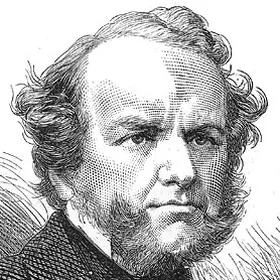
Howard Staunton
Solid positional planning, flank control with 1. c4, and foundational English opening scholarship.
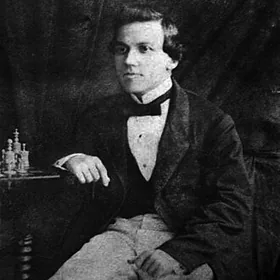
Paul Morphy
Rapid piece development, open central files, and decisive sacrifices against uncastled kings.
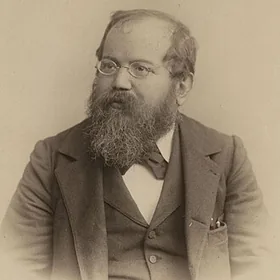
Wilhelm Steinitz
Architect of modern positional theory: small advantages, sound pawn structure, and resilient defense.