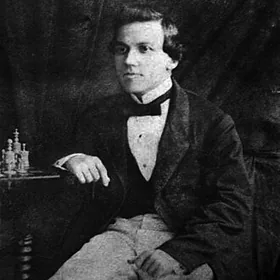
Paul Morphy
Unofficial World Champion (1858–1860)
Born in New Orleans and trained in law, Paul Morphy won the First American Chess Congress in New York (1857) before crossing the Atlantic to defeat Europe's finest masters in London and Paris. Morphy proved that classical chess rewards harmony, open files, and swift mobilization - principles crystallized forever in his 1858 Paris Opera Game.
Portrait: Unknown authorUnknown author · Public domain
Interactive Demonstration
The Opera Game (1858)
Paul Morphy vs. Duke Karl of Brunswick & Count Isouard · Paris Opera House (Casual) · ECO C41 (1-0)
Strategic Portrait
Playing Style & Contribution
Rapid piece development, open central files, and decisive sacrifices against uncastled kings.
Verified Career Milestones
- 1857: Won the First American Chess Congress in New York at age 20.
- 1858: Defeated Adolf Anderssen (+7 -2 =2) and Daniel Harrwitz in Paris.
- 1858: Played the immortal 17-move Opera Game against Duke Karl of Brunswick and Count Isouard.
Practical Application
Lessons You Can Apply Today
- Bring every minor piece and rook into active play before launching the final combination.
- Open central files immediately when your opponent's king remains uncastled in the middle.
- Never waste an opening tempo chasing a peripheral pawn while development lags.
Essential Reading
Morphy's Games of Chess - Philip W. Sergeant (1916)
Dover Publications · ISBN 0486203867
Purchase Book on AmazonSignature Openings Studied by Paul Morphy
Contemporaries & Era Peers
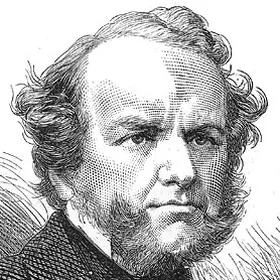
Howard Staunton
Solid positional planning, flank control with 1. c4, and foundational English opening scholarship.
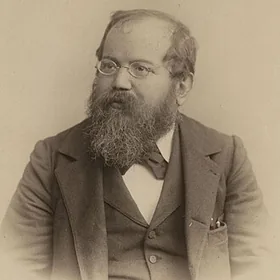
Wilhelm Steinitz
Architect of modern positional theory: small advantages, sound pawn structure, and resilient defense.
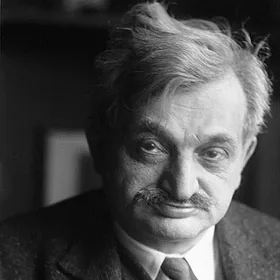
Emanuel Lasker
Practical psychology, fighting resilience, sharp tactical calculation, and masterly endgame technique.