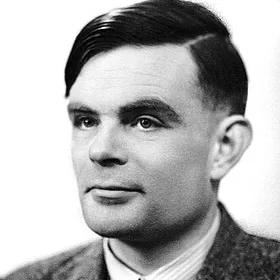
Alan Turing
Author of Turochamp (1948) - World's First Chess Algorithm
At Bletchley Park and the University of Manchester, mathematician Alan Turing co-designed 'Turochamp' in 1948, the first complete computer chess algorithm in human history. Because no computer in Manchester could yet execute it, Turing hand-calculated every move of Turochamp on paper against his colleague Alick Glennie in 1952, a game you can replay move-for-move right here.
Portrait: Elliott & Fry · Public domain
Interactive Demonstration
Turochamp vs. Alick Glennie (First Chess Program Game) (1952)
Turochamp (Alan Turing) vs. Alick Glennie · Manchester, United Kingdom · ECO C28 (0-1)
Strategic Portrait
Playing Style & Contribution
Minimax tree search, positional heuristics, and the foundational idea of quiescence evaluation.
Verified Career Milestones
- 1948: Designed 'Turochamp', introducing piece-value tables, mobility scoring, and capture-extension ('quiescence') search.
- 1952: Hand-executed Turochamp on paper against Alick Glennie in Manchester, UK.
- 1953: Published 'Digital Computers Applied to Games', shaping artificial intelligence for decades.
Practical Application
Lessons You Can Apply Today
- Turing's quiescence insight applies directly to human thought: never stop calculating a variation in the middle of a capture sequence.
- Evaluate every position cleanly along three axes: material, mobility (piece activity), and king safety.
- Measure candidate moves by both immediate material and piece mobility, the twin pillars of Turing’s original Turochamp evaluation function.
Essential Reading
Alan Turing: The Enigma - Andrew Hodges (1983)
Princeton University Press · ISBN 069116472X
Purchase Book on AmazonSignature Openings Studied by Alan Turing
Contemporaries & Era Peers
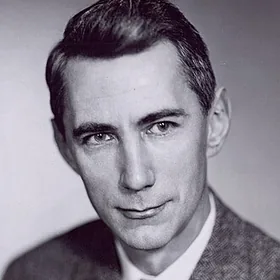
Claude Shannon
Evaluation functions, minimax search, and Type-A brute-force vs. Type-B selective search architecture.
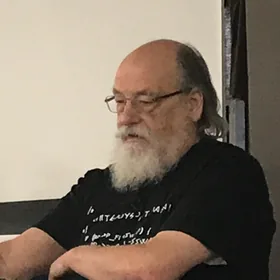
Ken Thompson
Dedicated move-generation hardware, transposition tables, and complete retrograde endgame tablebases.
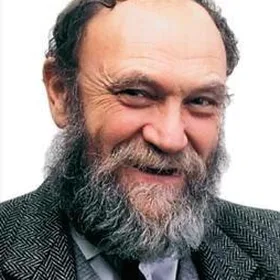
Vladimir Arlazarov & Mikhail Donskoy (Kaissa)
64-bit bitboard representations, null-move heuristics, and disciplined Soviet algorithmic craft.