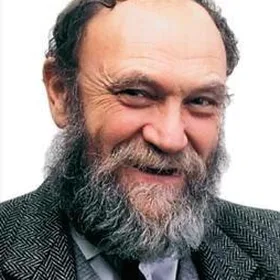
Vladimir Arlazarov & Mikhail Donskoy (Kaissa)
Architects of Kaissa - 1st World Computer Chess Champion (1974)
Created at Moscow's Institute of Control Sciences (building on Georgy Adelson-Velsky's early ITEP chess program), 'Kaissa' swept the inaugural World Computer Chess Championship in Stockholm (1974) with a spotless 4–0 score. Its 64-bit bitboard representation remains the foundational data structure of every elite chess engine built since.
Portrait: Wikimedia Commons (BESM-6 / Soviet Computing Archive) · Wikimedia Commons
Interactive Demonstration
Kaissa vs. Ostrich (1st World Computer Championship) (1974)
Kaissa (USSR) vs. Ostrich (USA) · 1st World Computer Chess Championship, Stockholm (Round 4) · ECO D02 (1-0)
Strategic Portrait
Playing Style & Contribution
64-bit bitboard representations, null-move heuristics, and disciplined Soviet algorithmic craft.
Verified Career Milestones
- 1966–1967: Earlier ITEP Soviet program defeated Stanford's Kotok-McCarthy program in the famous US–USSR telegraph match.
- 1974: 'Kaissa' went 4–0 in Stockholm to win the 1st World Computer Chess Championship.
- 1970s: Pioneered 64-bit bitboards and opening-book hashing still standard in modern chess programming.
Practical Application
Lessons You Can Apply Today
- Representation shapes understanding: seeing the board in patterns (files, diagonals, pawn chains) mirrors how bitboards evaluate chess cleanly.
- Pair classical opening fundamentals with disciplined calculation.
- Keep your move ordering disciplined during calculation by examining forcing tactical refutations before quiet positional improvements.
Essential Reading
How Computers Play Chess - David Levy & Monroe Newborn
Computer Science Press · ISBN 0716781212
Purchase Book on AmazonSignature Openings Studied by Vladimir Arlazarov & Mikhail Donskoy (Kaissa)
Contemporaries & Era Peers
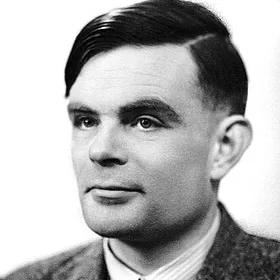
Alan Turing
Minimax tree search, positional heuristics, and the foundational idea of quiescence evaluation.
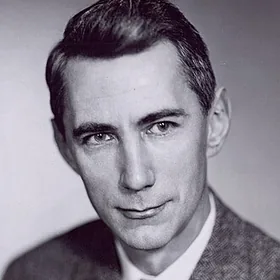
Claude Shannon
Evaluation functions, minimax search, and Type-A brute-force vs. Type-B selective search architecture.

Ken Thompson
Dedicated move-generation hardware, transposition tables, and complete retrograde endgame tablebases.