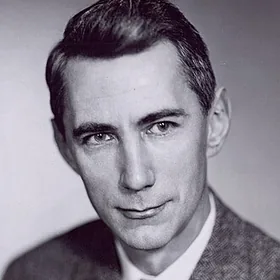
Claude Shannon
Bell Labs · Author of 'Programming a Computer for Playing Chess' (1950)
The father of information theory published his landmark 1950 Bell Labs paper defining the mathematical framework, static evaluation, minimax search, and quiescence, that still governs classical chess engines like GetChess's built-in engine today. He also estimated the famous Shannon Number (roughly 10^120 possible chess games).
Portrait: Unknown photographer, Bell Telephone Laboratories · Public domain
Interactive Demonstration
Deep Blue vs. Kasparov - Historic Turning Point (1997)
Deep Blue (IBM) vs. Garry Kasparov · IBM Match, New York (Game 6) · ECO B17 (1-0)
Strategic Portrait
Playing Style & Contribution
Evaluation functions, minimax search, and Type-A brute-force vs. Type-B selective search architecture.
Verified Career Milestones
- 1949–1950: Presented and published 'Programming a Computer for Playing Chess' at Bell Labs.
- 1950: Calculated the Shannon Number (~10^120 game-tree complexity of chess).
- 1950: Defined Type-A (full-width) vs. Type-B (selective) search, the core debate of chess AI for half a century.
Practical Application
Lessons You Can Apply Today
- Human masters succeed through Shannon's 'Type-B' thinking: prune irrelevant moves immediately and focus deeply on two or three principled candidates.
- Structure your evaluation cleanly: material, pawn structure (doubled/isolated/backward pawns), and mobility.
- Distinguish quiet positions from sharp tactical trees: calculate deeper only along forcing captures, checks, and pawn breaks, exactly as Shannon’s Type-B strategy prescribes.
Essential Reading
A Mind at Play: How Claude Shannon Invented the Information Age - Jimmy Soni & Rob Goodman
Simon & Schuster · ISBN 1476766681
Purchase Book on AmazonSignature Openings Studied by Claude Shannon
Contemporaries & Era Peers
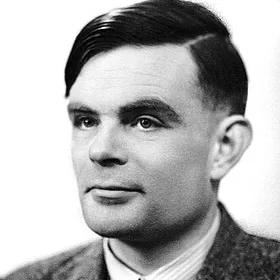
Alan Turing
Minimax tree search, positional heuristics, and the foundational idea of quiescence evaluation.
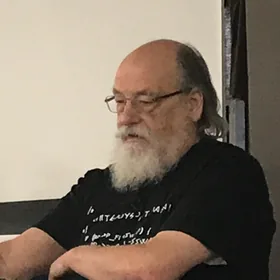
Ken Thompson
Dedicated move-generation hardware, transposition tables, and complete retrograde endgame tablebases.
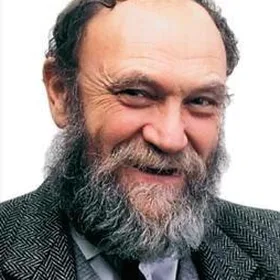
Vladimir Arlazarov & Mikhail Donskoy (Kaissa)
64-bit bitboard representations, null-move heuristics, and disciplined Soviet algorithmic craft.