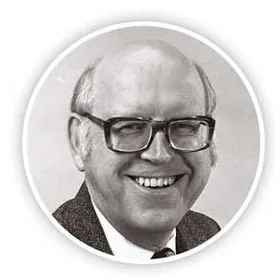
Allen Newell
Turing Award Winner & Co-Architect of NSS (1958) Chess Program
Carnegie Mellon computer scientist Allen Newell authored the 1955 paper "The Chess Machine" and co-built the Newell-Shaw-Simon (NSS) program in 1958, one of the first full-board computer chess engines and an early pioneer of alpha-beta cutoffs and selective tactical goals.
Portrait: Archival Portrait · Wikimedia Commons
Interactive Demonstration
Kaissa vs. Ostrich (1st World Computer Championship) (1974)
Kaissa (USSR) vs. Ostrich (USA) · 1st World Computer Chess Championship, Stockholm (Round 4) · ECO D02 (1-0)
Strategic Portrait
Playing Style & Contribution
Heuristic problem solving, list-processing search trees, and early alpha-beta pruning.
Verified Career Milestones
- 1955: Published "The Chess Machine: An Example of Dealing with a Complex Task by Adaptation".
- 1958: Co-built the NSS chess program with Cliff Shaw and Herbert Simon, using independent tactical and positional goals.
- 1975: Received the ACM Turing Award for foundational contributions to artificial intelligence and cognitive modeling.
Practical Application
Lessons You Can Apply Today
- Organize your thought process by concrete goals: king safety, material balance, center control, and piece development.
- Stop analyzing a candidate line the moment you discover a clear tactical refutation, just as alpha-beta pruning discards refuted branches.
- Break complex middlegames into manageable sub-problems rather than looking for one miraculous move.
Essential Reading
How Computers Play Chess - David Levy & Monroe Newborn
Computer Science Press · ISBN 0716781212
Purchase Book on AmazonContemporaries & Era Peers
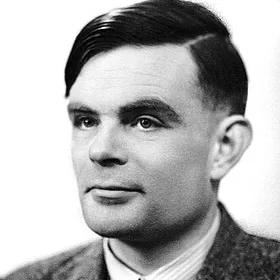
Alan Turing
Minimax tree search, positional heuristics, and the foundational idea of quiescence evaluation.
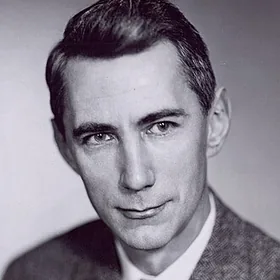
Claude Shannon
Evaluation functions, minimax search, and Type-A brute-force vs. Type-B selective search architecture.
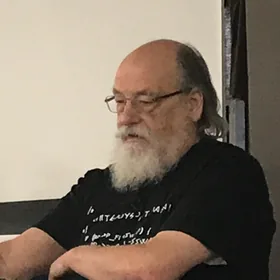
Ken Thompson
Dedicated move-generation hardware, transposition tables, and complete retrograde endgame tablebases.