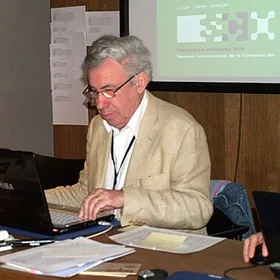
David Levy
Scottish IM, ICGA President & Winner of the 1968–1978 Chess Wager
Scottish International Master David Levy famously wagered leading AI professors in 1968 that no computer program would defeat him in a match within ten years. He won the bet in 1978 by defeating Chess 4.7 in Toronto using patient anti-computer strategy, co-authored How Computers Play Chess, and later served as President of the International Computer Games Association.
Portrait: Curtasun · Public domain
Interactive Demonstration
Kaissa vs. Ostrich (1st World Computer Championship) (1974)
Kaissa (USSR) vs. Ostrich (USA) · 1st World Computer Chess Championship, Stockholm (Round 4) · ECO D02 (1-0)
Strategic Portrait
Playing Style & Contribution
Anti-computer positional strategy, long-term pawn-structure play, and fifty years of ICGA leadership.
Verified Career Milestones
- 1968: Accepted the famous ten-year wager against John McCarthy, Donald Michie, Seymour Papert, and Ed Kozdrowicki.
- 1978: Defeated Northwestern University’s Chess 4.7 (3.5–1.5) in Toronto to win the ten-year man-vs-machine bet.
- 1980s–present: Co-authored How Computers Play Chess and led the International Computer Games Association (ICGA).
Practical Application
Lessons You Can Apply Today
- Closed pawn structures and patient maneuvering neutralize purely tactical opponents who thrive only in wide-open chaos.
- Understand your opponent’s style and steer the position into structures where long-term planning outweighs short-term calculation.
- Play calmly in quiet endgames: even strong tactical players often drift when there are no immediate captures to calculate.
Essential Reading
How Computers Play Chess - David Levy & Monroe Newborn
Computer Science Press · ISBN 0716781212
Purchase Book on AmazonSignature Openings Studied by David Levy
Contemporaries & Era Peers
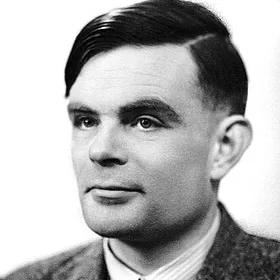
Alan Turing
Minimax tree search, positional heuristics, and the foundational idea of quiescence evaluation.

Claude Shannon
Evaluation functions, minimax search, and Type-A brute-force vs. Type-B selective search architecture.
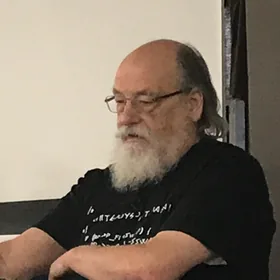
Ken Thompson
Dedicated move-generation hardware, transposition tables, and complete retrograde endgame tablebases.