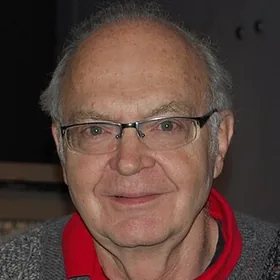
Donald Knuth
Stanford · Turing Award Winner & Co-Author of Alpha-Beta Analysis (1975)
Stanford computer scientist Donald E. Knuth, author of The Art of Computer Programming and 1974 Turing Award laureate, co-authored the landmark 1975 paper "An Analysis of Alpha-Beta Pruning" with Ronald Moore. Their theorem proved how optimal move ordering squares the effective search depth of chess programs.
Portrait: Alex Handy · CC BY-SA 2.0
Interactive Demonstration
Deep Blue vs. Kasparov (First Classical Machine Win) (1996)
Deep Blue (IBM) vs. Garry Kasparov · IBM Deep Blue vs. Kasparov Match, Philadelphia (Game 1) · ECO B22 (1-0)
Strategic Portrait
Playing Style & Contribution
Mathematical proof of alpha-beta search bounds, optimal move ordering, and algorithmic precision.
Verified Career Milestones
- 1974: Awarded the ACM Turing Award for foundational contributions to the analysis of algorithms and programming languages.
- 1975: Co-authored "An Analysis of Alpha-Beta Pruning" with Ronald Moore, establishing the exact mathematical theory of minimax cutoffs.
- 1968–present: Authored The Art of Computer Programming, influencing every modern generation of engine and algorithm designers.
Practical Application
Lessons You Can Apply Today
- Order your candidate moves cleanly: inspecting the strongest forcing move first reveals refutations rapidly and saves clock time.
- Clarity of thought beats brute-force fatigue; pruning irrelevant variations early lets you calculate critical lines twice as deep.
- Verify every critical tactical sequence to a quiet position before executing it on the board.
Essential Reading
The Art of Computer Programming, Volume 1: Fundamental Algorithms - Donald E. Knuth
Addison-Wesley · ISBN 0201896834
Purchase Book on AmazonSignature Openings Studied by Donald Knuth
Contemporaries & Era Peers
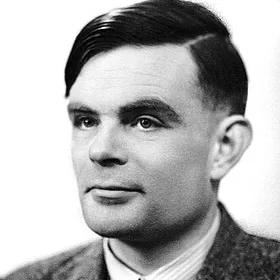
Alan Turing
Minimax tree search, positional heuristics, and the foundational idea of quiescence evaluation.

Claude Shannon
Evaluation functions, minimax search, and Type-A brute-force vs. Type-B selective search architecture.
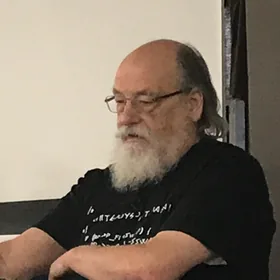
Ken Thompson
Dedicated move-generation hardware, transposition tables, and complete retrograde endgame tablebases.