
John McCarthy
Coined "Artificial Intelligence" & Formalized Alpha-Beta Pruning
Stanford and MIT pioneer John McCarthy coined the term "Artificial Intelligence" in 1955, formalized the alpha-beta pruning algorithm that powers classical chess search, and guided Alan Kotok’s MIT chess program into the historic 1966–1967 telegraph match against Moscow’s ITEP program.
Portrait: "null0" · CC BY-SA 2.0
Interactive Demonstration
Kaissa vs. Ostrich (1st World Computer Championship) (1974)
Kaissa (USSR) vs. Ostrich (USA) · 1st World Computer Chess Championship, Stockholm (Round 4) · ECO D02 (1-0)
Strategic Portrait
Playing Style & Contribution
Alpha-beta search pruning, Lisp symbolic reasoning, and the 1966–1967 US–USSR telegraph match.
Verified Career Milestones
- 1956: Co-organized the Dartmouth Conference and conceived alpha-beta pruning to eliminate redundant branches in game trees.
- 1966–1967: Led Stanford’s Kotok-McCarthy program in the first international US–USSR computer chess telegraph match.
- 1971: Received the ACM Turing Award for his foundational contributions to artificial intelligence and the Lisp language.
Practical Application
Lessons You Can Apply Today
- Check forcing replies first: just as alpha-beta pruning achieves massive speedups with good move ordering, examining checks and captures first saves calculation energy.
- Once a move allows a clear tactical refutation, move on immediately to your next candidate.
- Appreciate how clean search discipline turns limited time into accurate practical decisions.
Essential Reading
How Computers Play Chess - David Levy & Monroe Newborn
Computer Science Press · ISBN 0716781212
Purchase Book on AmazonSignature Openings Studied by John McCarthy
Contemporaries & Era Peers
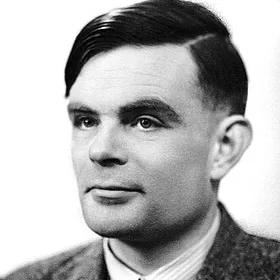
Alan Turing
Minimax tree search, positional heuristics, and the foundational idea of quiescence evaluation.
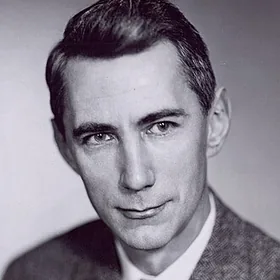
Claude Shannon
Evaluation functions, minimax search, and Type-A brute-force vs. Type-B selective search architecture.
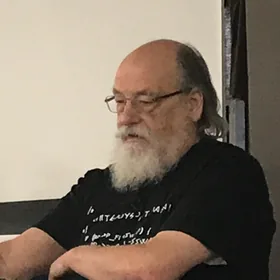
Ken Thompson
Dedicated move-generation hardware, transposition tables, and complete retrograde endgame tablebases.