
Jonathan Schaeffer
University of Alberta · Inventor of the History Heuristic & Phoenix
University of Alberta computer scientist Jonathan Schaeffer created the chess program Phoenix (finishing joint first in the 1986 World Computer Chess Championship) and introduced the History Heuristic in 1983, a lightweight move-ordering method still used inside virtually every alpha-beta chess engine. He later led the Chinook team that mathematically solved checkers.
Portrait: Scott Mair · CC BY 2.0
Interactive Demonstration
Deep Blue vs. Kasparov (First Classical Machine Win) (1996)
Deep Blue (IBM) vs. Garry Kasparov · IBM Deep Blue vs. Kasparov Match, Philadelphia (Game 1) · ECO B22 (1-0)
Strategic Portrait
Playing Style & Contribution
History-heuristic move ordering, parallel game-tree search, and complete endgame databases.
Verified Career Milestones
- 1983: Invented the History Heuristic for move ordering, dramatically accelerating alpha-beta search in chess engines.
- 1986: His chess engine Phoenix tied for first place at the 5th World Computer Chess Championship in Cologne.
- 2007: Led the University of Alberta Chinook team to mathematically weakly solve 8x8 checkers.
Practical Application
Lessons You Can Apply Today
- Notice recurring tactical ideas across a position: a quiet move that refutes one variation often works in neighboring lines too, just like the History Heuristic.
- Combine tactical calculation with methodical endgame knowledge so won positions are converted without drama.
- Discipline in eliminating blunders beats flashy speculation over a long tournament.
Essential Reading
One Jump Ahead: Computer Perfection at Checkers - Jonathan Schaeffer
Springer · ISBN 0387765751
Purchase Book on AmazonSignature Openings Studied by Jonathan Schaeffer
Contemporaries & Era Peers
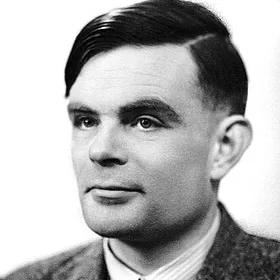
Alan Turing
Minimax tree search, positional heuristics, and the foundational idea of quiescence evaluation.

Claude Shannon
Evaluation functions, minimax search, and Type-A brute-force vs. Type-B selective search architecture.
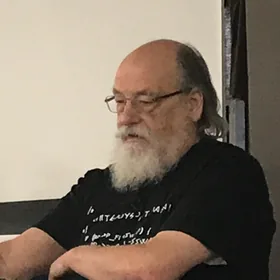
Ken Thompson
Dedicated move-generation hardware, transposition tables, and complete retrograde endgame tablebases.