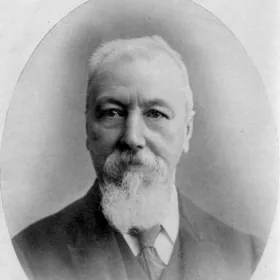
Joseph Henry Blackburne
British Chess Legend ("The Black Death") · Winner of Berlin 1881
For over half a century, Manchester-born Joseph Henry Blackburne was the beloved titan of British chess, winning Berlin 1881 three full points ahead of Zukertort, competing at Hastings 1895, and astonishing crowds across Britain with simultaneous blindfold exhibitions well into his seventies.
Portrait: Archival Portrait · Wikimedia Commons
Interactive Demonstration
Blackburne's Classical Ruy Lopez Maneuvering (1889)
Joseph Henry Blackburne vs. Samuel Lipschütz · 6th American Chess Congress, New York · ECO C65 (1-0)
Strategic Portrait
Playing Style & Contribution
Classical English solidity infused with lethal tactical vision and celebrated blindfold play.
Verified Career Milestones
- 1881: Won the Berlin International Tournament by three clear points (+13 -1 =2).
- 1868–1914: Won two British Championships and defeated Steinitz, Lasker, and Tarrasch in tournament play.
- 1899: Published Mr. Blackburne’s Games at Chess, a classic of Victorian English chess prose.
Practical Application
Lessons You Can Apply Today
- Master the classical Ruy Lopez knight maneuver (Nbd2-f1-g3) to build lasting kingside pressure.
- Stay patient in equal middlegames - Blackburne won dozens of games by remaining tactically alert in the fifth hour.
- Develop strong board visualization through blindfold calculation of 2- and 3-move sequences.
Essential Reading
Blackburne's Chess Games - Joseph Henry Blackburne (1899)
Dover Publications · ISBN 0486238571
Purchase Book on AmazonSignature Openings Studied by Joseph Henry Blackburne
Contemporaries & Era Peers
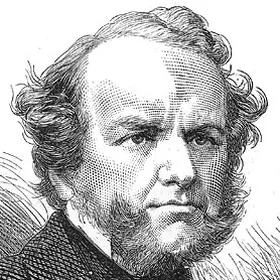
Howard Staunton
Solid positional planning, flank control with 1. c4, and foundational English opening scholarship.
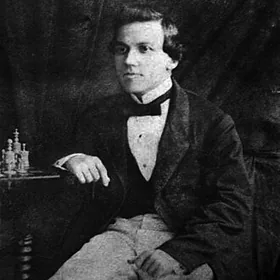
Paul Morphy
Rapid piece development, open central files, and decisive sacrifices against uncastled kings.
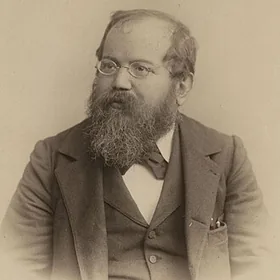
Wilhelm Steinitz
Architect of modern positional theory: small advantages, sound pawn structure, and resilient defense.