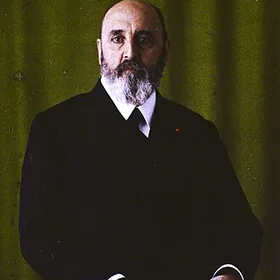
Leonardo Torres y Quevedo
Inventor of El Ajedrecista (1912) - First True Chess Automaton
More than thirty years before electronic digital computers existed, Spanish engineer and mathematician Leonardo Torres y Quevedo built El Ajedrecista in 1912, an electromechanical machine that played King and Rook against a human player’s lone King from any starting position and delivered checkmate automatically without human intervention.
Portrait: Auguste Léon · Public domain
Interactive Demonstration
Turochamp vs. Alick Glennie (First Chess Program Game) (1952)
Turochamp (Alan Turing) vs. Alick Glennie · Manchester, United Kingdom · ECO C28 (0-1)
Strategic Portrait
Playing Style & Contribution
Electromechanical logic relays, guaranteed checkmate algorithms, and zero human deception.
Verified Career Milestones
- 1912: Constructed El Ajedrecista in Madrid, the first genuine autonomous chess-playing machine in history.
- 1914: Demonstrated the automaton publicly in Paris, proving mechanical decision trees could master a real chess endgame.
- 1920: Built an improved second version using electromagnets beneath the board and voice announcements for check and checkmate.
Practical Application
Lessons You Can Apply Today
- Master the elementary King-and-Rook versus King checkmate systematically: restrict the enemy king file by file with the rook before bringing your own king up.
- Complex chess endgames reduce to crisp, repeatable rules when you identify the exact geometric boundaries that trap the opposing king.
- Always verify forced winning procedures move by move; El Ajedrecista never relied on intuition because its endgame logic left zero escape squares.
Essential Reading
How Computers Play Chess - David Levy & Monroe Newborn
Computer Science Press · ISBN 0716781212
Purchase Book on AmazonContemporaries & Era Peers
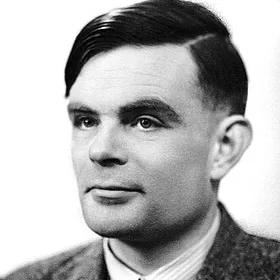
Alan Turing
Minimax tree search, positional heuristics, and the foundational idea of quiescence evaluation.

Claude Shannon
Evaluation functions, minimax search, and Type-A brute-force vs. Type-B selective search architecture.
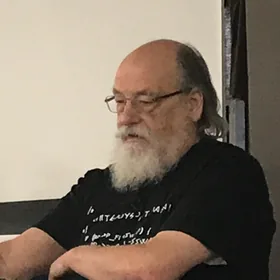
Ken Thompson
Dedicated move-generation hardware, transposition tables, and complete retrograde endgame tablebases.