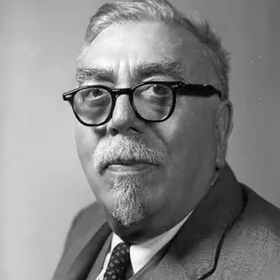
Norbert Wiener
MIT Mathematician & Founder of Cybernetics (1948)
MIT mathematician Norbert Wiener founded cybernetics in 1948 and wrote one of the earliest published technical discussions of how a computer could play chess by combining lookahead search with adaptive position evaluation. At the 1951 Paris Cybernetics Congress, Wiener famously played against Torres y Quevedo’s El Ajedrecista.
Portrait: Garry Olsh · CC0
Interactive Demonstration
Turochamp vs. Alick Glennie (First Chess Program Game) (1952)
Turochamp (Alan Turing) vs. Alick Glennie · Manchester, United Kingdom · ECO C28 (0-1)
Strategic Portrait
Playing Style & Contribution
Feedback loops, adaptive evaluation, and early theoretical analysis of chess-playing machines.
Verified Career Milestones
- 1948: Published Cybernetics, outlining recursive evaluation and lookahead concepts for chess-playing machines.
- 1951: Tested El Ajedrecista at the Paris Cybernetics Congress, bridging mechanical automata and modern computing.
- 1950s: Influenced a generation of MIT researchers who later built the earliest tournament chess programs.
Practical Application
Lessons You Can Apply Today
- Treat every completed game as a feedback loop: identify the exact evaluation mistake that turned a balanced position against you.
- Adjust your plan dynamically when the board changes; stubbornly repeating an outdated plan ignores the opponent’s feedback.
- Balance short-term tactical checks with long-term structural stability.
Essential Reading
Cybernetics: or Control and Communication in the Animal and the Machine - Norbert Wiener
The MIT Press · ISBN 026273009X
Purchase Book on AmazonSignature Openings Studied by Norbert Wiener
Contemporaries & Era Peers
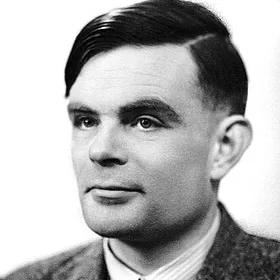
Alan Turing
Minimax tree search, positional heuristics, and the foundational idea of quiescence evaluation.

Claude Shannon
Evaluation functions, minimax search, and Type-A brute-force vs. Type-B selective search architecture.
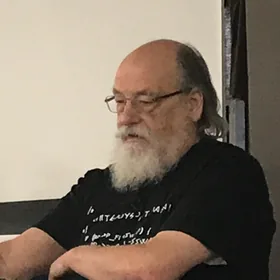
Ken Thompson
Dedicated move-generation hardware, transposition tables, and complete retrograde endgame tablebases.