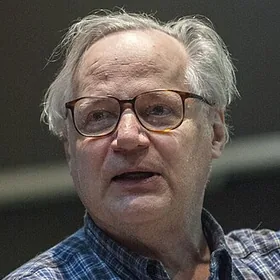
Richard Greenblatt
MIT · Author of Mac Hack VI (1967), First Tournament Chess Engine
Working at MIT’s AI Lab, Richard Greenblatt created Mac Hack VI in 1967, the first computer chess program to compete in an official USCF human tournament and defeat a rated tournament player (scoring a USCF rating around 1400–1500). Mac Hack VI also popularized transposition tables to avoid re-evaluating identical board positions.
Portrait: en:Richard P. Gabriel · CC BY-SA 4.0
Interactive Demonstration
Kaissa vs. Ostrich (1st World Computer Championship) (1974)
Kaissa (USSR) vs. Ostrich (USA) · 1st World Computer Chess Championship, Stockholm (Round 4) · ECO D02 (1-0)
Strategic Portrait
Playing Style & Contribution
Transposition tables, tactical plausibility ordering, and practical tournament play.
Verified Career Milestones
- 1967: Mac Hack VI became the first computer program to enter a human tournament and defeat a USCF Class C opponent.
- 1967: Defeated philosopher Hubert Dreyfus in a famous public game, refuting claims that computers could not play respectable chess.
- 1967: Introduced practical transposition-table hashing in tournament play, cutting redundant tree search dramatically.
Practical Application
Lessons You Can Apply Today
- Recognize transpositions across openings: the exact same pawn structure can arise from several different move orders.
- Never underestimate solid tactical awareness; Mac Hack VI beat human club players simply by refusing to overlook two-move threats.
- Check for simple hanging pieces and tactical forks on every single move before pursuing ambitious positional plans.
Essential Reading
How Computers Play Chess - David Levy & Monroe Newborn
Computer Science Press · ISBN 0716781212
Purchase Book on AmazonContemporaries & Era Peers

Alan Turing
Minimax tree search, positional heuristics, and the foundational idea of quiescence evaluation.

Claude Shannon
Evaluation functions, minimax search, and Type-A brute-force vs. Type-B selective search architecture.
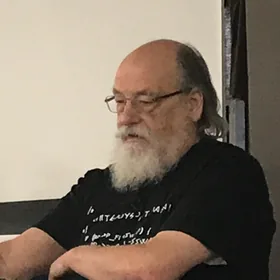
Ken Thompson
Dedicated move-generation hardware, transposition tables, and complete retrograde endgame tablebases.