
Tord Romstad, Marco Costalba & Joona Kiiski (Stockfish)
Creators of Stockfish - Open-Source Chess Engine Revolution
Launched in 2008 by Marco Costalba from Tord Romstad’s open-source Glaurung engine and developed alongside Joona Kiiski and hundreds of open-source contributors, Stockfish became the strongest chess engine in the world. By combining ultra-fast alpha-beta search with Yu Nasu’s Efficiently Updatable Neural Networks (NNUE) in 2020, Stockfish democratized grandmaster-grade analysis for every student on earth.
Portrait: Klein Maetschke · GPLv3
Interactive Demonstration
Deep Blue vs. Kasparov - Historic Turning Point (1997)
Deep Blue (IBM) vs. Garry Kasparov · IBM Match, New York (Game 6) · ECO B17 (1-0)
Strategic Portrait
Playing Style & Contribution
Open-source collaborative engineering, Fishtest statistical tuning, and hybrid NNUE search.
Verified Career Milestones
- 2008: Released Stockfish as free GPL open-source software, built on Tord Romstad’s Glaurung architecture.
- 2013: Launched Fishtest distributed testing, allowing volunteers worldwide to verify every tiny Elo improvement scientifically.
- 2020–present: Integrated NNUE neural evaluation into classical alpha-beta search, dominating TCEC superfinals above 3600 Elo.
Practical Application
Lessons You Can Apply Today
- Use engine analysis as a teacher, not a crutch: ask why a move improves piece coordination rather than memorizing evaluation numbers.
- Small, consistent positional gains accumulate into decisive advantages, the exact principle behind Stockfish’s Fishtest methodology.
- Check your own games first without an engine, then compare your critical turning points against concrete tactical variations.
Essential Reading
Game Changer: AlphaZero’s Groundbreaking Chess Strategies and the Promise of AI - Matthew Sadler & Natasha Regan
New In Chess · ISBN 9056918184
Purchase Book on AmazonSignature Openings Studied by Tord Romstad, Marco Costalba & Joona Kiiski (Stockfish)
Contemporaries & Era Peers
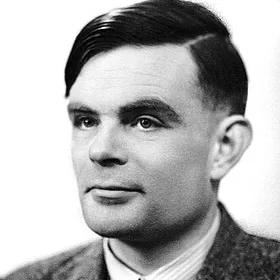
Alan Turing
Minimax tree search, positional heuristics, and the foundational idea of quiescence evaluation.
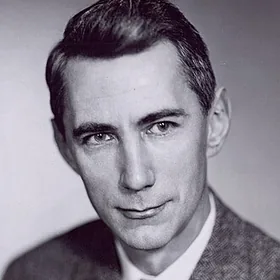
Claude Shannon
Evaluation functions, minimax search, and Type-A brute-force vs. Type-B selective search architecture.
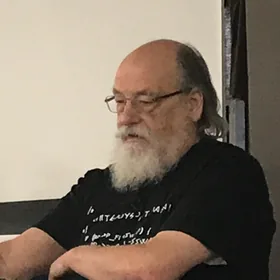
Ken Thompson
Dedicated move-generation hardware, transposition tables, and complete retrograde endgame tablebases.