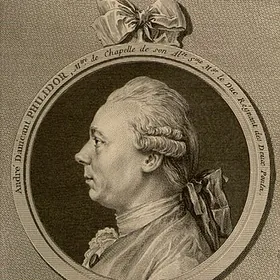
François-André Danican Philidor
Foremost Master of the 18th Century · Author of Analyse du jeu des Échecs (1749)
A renowned operatic composer who spent his final decades in London at Parsloe’s Chess Club in St. James’s Street, Philidor revolutionized chess by declaring that pawns, not isolated piece raids, determine strategic truth. His 1749 and 1777 treatises introduced the Philidor Defense, the Philidor Rook Endgame Position, and Philidor’s Legacy smothered mate.
Portrait: Augustin de Saint-Aubin, Charles-Nicolas Cochin · Public domain
Interactive Demonstration
The Opera Game (1858)
Paul Morphy vs. Duke Karl of Brunswick & Count Isouard · Paris Opera House (Casual) · ECO C41 (1-0)
Strategic Portrait
Playing Style & Contribution
Pioneer of pawn structure ("Pawns are the soul of chess") and classical rook endgame defense.
Verified Career Milestones
- 1747: Defeated Philipp Stamma (+8 -1 =1) at Slaughter’s Coffee House in London.
- 1749: Published Analyse du jeu des Échecs in London, the first true book on chess strategy.
- 1777: Published the timeless Philidor Position for drawing rook-and-pawn endgames.
Practical Application
Lessons You Can Apply Today
- Move pawns deliberately to support your pieces and create lasting pawn breaks rather than weakening your structure.
- Memorize the Philidor third-rank rook defense - it saves countless endgames a pawn down.
- Study smothered mate patterns ("Philidor’s Legacy") around castled kings.
Essential Reading
Analysis of the Game of Chess - François-André Danican Philidor (1777)
Franklin Classics · ISBN 0343779315
Purchase Book on AmazonSignature Openings Studied by François-André Danican Philidor
Contemporaries & Era Peers
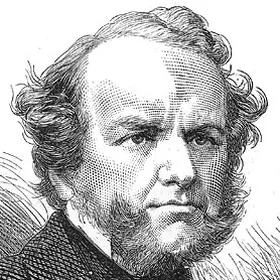
Howard Staunton
Solid positional planning, flank control with 1. c4, and foundational English opening scholarship.
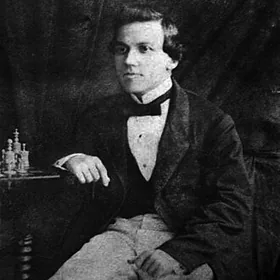
Paul Morphy
Rapid piece development, open central files, and decisive sacrifices against uncastled kings.
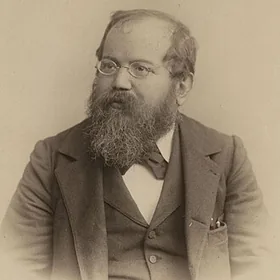
Wilhelm Steinitz
Architect of modern positional theory: small advantages, sound pawn structure, and resilient defense.